Data Platform Alternatives
Done-for-you data services as an alternative to self-serve platforms.
Why teams switch from self-serve to managed
Self-serve data platforms promise a lot. You get a login, a credit balance, and access to a massive database. In theory, you can find any contact, enrich any record, build any list.
In practice, a self-serve platform still requires someone to define filters, manage usage, review exports, and reconcile the results with the CRM. Measure that labor and test data quality on a representative sample before choosing a delivery model.
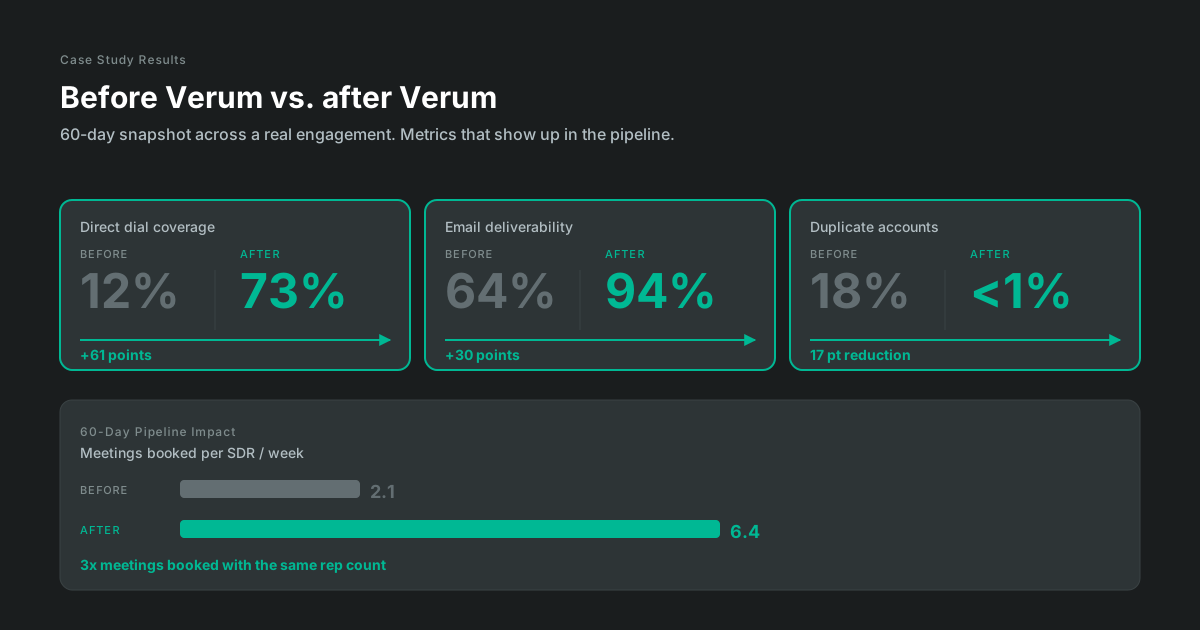
Verum takes a different approach. You tell us what you need, the delivery plan returns clean, verified data. No logins to manage, no credits to burn through, no learning curve. Per-project pricing instead of annual agreements. And because we validate each record before delivery, you're not paying to clean up the data you just bought.
Compare Verum to Popular Platforms
ZoomInfo Alternative
Compare a self-serve sales-intelligence platform with a managed project. Verify current charge, coverage, usage rights, and output quality on the same sample.
Apollo Alternative
Compare Apollo's current self-serve plans with a managed enrichment project, including credits, verification steps, and internal operating time.
Lusha Alternative
Compare Lusha's current workflows and plan limits with Verum's bulk cleaning and enrichment project scope.
Clearbit Alternative
Compare HubSpot's current Breeze Intelligence capabilities with a CRM-agnostic managed cleaning and enrichment workflow.
Cognism Alternative
Compare Cognism's documented market coverage and workflow with a US-focused managed project using your own sample.
6sense Alternative
Compare 6sense's current intent and ABM capabilities with the narrower job of cleaning and enriching CRM data; request scope and pricing from each provider.
Demandbase Alternative
Compare Demandbase's current ABM platform scope with a defined data-cleaning and enrichment project.
RocketReach Alternative
Compare RocketReach's current lookup workflow with batch enrichment, including verification method, acceptance criteria, and unmatched records.
Hunter.io Alternative
Compare Hunter's current email-focused features with a broader managed project for contact, company, and CRM fields.
UpLead Alternative
Compare UpLead's current credits and capabilities with the quoted scope of a managed data-cleaning and enrichment project.
SalesIntel Alternative
Compare SalesIntel's documented verification process and current commercial terms with Verum's project scope and acceptance criteria.
Lead411 Alternative
Kaspr Alternative
Compare Kaspr's current prospecting workflow with batch enrichment for an existing file, including supported inputs and verification steps.
Adapt.io Alternative
Compare Adapt.io's current plans and workflows with a managed project that includes human QA and data cleaning.
How do the pricing models compare?
Each vendor on this page fits one of three pricing models, and the model matters more than the logo. Subscriptions charge for access whether you use it or not. Credit systems charge for lookups, verified or not. Per-record services charge for delivered data.
| Model | Typical cost | Where it breaks down |
|---|---|---|
| Enterprise subscription (ZoomInfo, Cognism, SalesIntel) | Current vendor quote | Confirm term, seats, usage rights, and cancellation provisions |
| Intent and ABM platform | Current vendor quote | Evaluate implementation scope, data prerequisites, and measurement plan |
| Credit system (Apollo, UpLead, RocketReach, Kaspr, Adapt.io) | Published plans or sales quote | Credit caps can constrain bulk projects |
| Managed project service (Verum) | Written project quote | delivery schedule is scheduled, so daily one‑off prospecting may fit a platform better |
If your team prospects net‑new contacts every day, ongoing platform access may fit. If you enrich or clean in periodic batches, compare that subscription with a project quote. Our data enrichment tools roundup and People Data Labs vs ZoomInfo guide provide evaluation checklists.
How do you switch without losing your data?
Before a agreement ends, review the order form and license with the vendor or counsel. Export, retention, deletion, and continuing-use rights vary by agreement and data source; do not infer them from a comparison page.
The cleaner path is to stop treating vendor data as the system of record. Enrich into your own CRM fields, keep the source noted per field, and validate on the way in. Then a vendor change is a sourcing decision instead of a data migration. Teams that switched to per‑project enrichment tell us the forcing function was exactly this: continuation season arrived and they realized the database they'd been renting for three years still wasn't theirs.
Which option fits your situation?
Each vendor documents a different product scope. Confirm the current feature set, then test the fields and markets that matter to your team rather than relying on a general ranking.
Pick a platform when reps need self‑serve lookups inside their daily workflow. Teams that buy a platform for project work end up paying for twelve months to use it for three weeks.
Common questions about switching
What is the best alternative to a self-serve platform without an annual agreement?
Start with the delivery model rather than a universal winner. A managed service bills for a defined project; a platform provides ongoing self‑serve access. Ask each shortlisted vendor for current pricing, minimum term, usage limits, and post‑agreement data rights in writing.
Is there an UpLead alternative without credit limits?
A project‑priced service can be an alternative when a credit‑based plan does not fit a bulk job. Check UpLead's current plan limits and compare the total quoted spend, needed fields, unmatched‑record policy, and delivery schedule on the same volume.
Do data platforms clean your existing CRM data or only sell new contacts?
Product scope varies. Many sales‑intelligence platforms support prospecting and some enrichment workflows, while CRM cleaning also requires deduplication, standardization, validation, and governance. Evaluate the exact workflow in current product documentation and a sample test.
How much do data platforms cost compared to a managed service?
Spending depends on current plan, seats, credits, fields, volume, and services. Request written quotes from shortlisted vendors and compare quoted total divided by accepted records plus the internal labor needed. A project service may fit periodic work; ongoing self‑serve access may fit daily prospecting.
Do you keep the data if you cancel a platform subscription?
Data‑use and retention rights depend on the specific vendor agreement, product, and data source. Read the current license and order form before purchase or cancellation. For a project service, make the permitted uses and post‑project retention terms explicit in the statement of work.
What you get with Verum instead
- No platform to learn. Send us your data or your criteria.
- Per-project pricing. Pay for what you need, when you need it. No annual minimums, no unused credits expiring at year-end.
- Reviewed delivery. Returned records include validation status, source date, and an exception path for uncertain email or phone results.
- Cleaning included. Platforms sell you raw data and leave the cleanup to you. We deduplicate, standardize, and validate before anything hits your CRM.
- You own the data. No deletion clauses. No re-licensing prices. The data the delivery plan returns is yours permanently.
Ready to switch?
Tell us what you're trying to accomplish and we'll show you how managed data services compare to what you're using now.
See What We'll FindRelated: Data Enrichment Services | Data Cleaning Services | All Enrichment Types | pricing
Record the source date for each plan, license, and feature statement so the comparison can be refreshed without inheriting stale assumptions.
Sources and references
Background references: ZoomInfo's product site and People Data Labs documentation.