PT Ownership Is Over the Map
Physical therapy is one of the most ownership-diverse healthcare segments. A solo PT running a cash-pay sports clinic operates completely differently from a 500-location PE-backed chain. Hospital outpatient PT departments have different purchasing than independent practices.
If you're selling equipment, software, or services to PT clinics, you need to know who makes purchasing decisions. A clinic manager at an ATI or US Physical Therapy location doesn't have the same authority as an owner-operator of an independent practice.
We classify PT practices by ownership structure, specialty focus, and decision-maker authority so your targeting holds up in the field.
How Fragmented Is the PT Market?
. Outpatient PT is delivered through tens of thousands of clinic locations, and no single chain holds a dominant share. Even ATI, the largest operator, runs under 1,000 clinics. The rest of the market splits across regional groups, hospital outpatient departments, physician-owned clinics, and thousands of single-location independents.
Two trends make the segment unusual among healthcare specialties. First, direct access: each state and the District of Columbia now allows patients to see a physical therapist without a physician referral in at least some form, per the American Physical Therapy Association. That opened the door for cash-pay and hybrid clinics that operate more like consumer businesses than referral-dependent medical practices. Second, workforce growth.
For a vendor, fragmentation cuts both ways. There's no single buyer to win, but there are also thousands of owner-operators who can say yes on a single call.
Which NPI Taxonomy Codes Cover Physical Therapy?
If you're building a PT universe from NPPES, retain the provider type, taxonomy code, and source date from the NPI Registry. Query both individual physical therapists and organizational physical-therapy clinics, then link them by documented practice evidence rather than assuming one record type represents the whole market.
| Taxonomy code | What it covers |
|---|---|
| 225100000X | Physical Therapist (individual, base code) |
| 2251X0800X | PT, Orthopedic specialization |
| 2251S0007X | PT, Sports specialization |
| 2251N0400X | PT, Neurology specialization |
| 2251P0200X | PT, Pediatrics specialization |
| 2251G0304X | PT, Geriatrics specialization |
| 261QP2000X | Clinic/Center, Physical Therapy (organizational) |
One caution: most PTs enumerate under the base code even when they practice a subspecialty, so taxonomy alone badly undercounts sports, neuro, and pelvic health clinics. We classify specialty focus from what practices publish about themselves, then use taxonomy as a cross-check.
Ownership Structure Classification
We classify PT practices by ownership:
- Independent/Owner-operated. Single-location or small multi-location practices owned by practicing PTs. Full purchasing authority.
- PE-backed chains. ATI, US Physical Therapy, Athletico, Select Medical, etc. Centralized purchasing, standardized operations.
- Hospital outpatient. Hospital-owned PT departments. Hospital supply chain purchasing.
- Physician-owned (POPTS). PT clinics owned by referring physicians. Unique dynamics around referral relationships.
- Regional groups. Multi-location practices that aren't national chains. May have centralized or distributed purchasing.
- agreement/SNF. PT services in skilled nursing facilities, often through agreement companies.
Specialty Focus Classification
PT clinics specialize in different populations and conditions:
Orthopedic/General: Post-surgical rehab, musculoskeletal conditions. Largest segment.
Sports medicine: Athletic injuries, performance training. Often younger patient population.
Neurological: Stroke rehab, Parkinson's, MS, brain injury. Specialized equipment needs.
Pediatric: Developmental delays, congenital conditions. Different equipment and approach.
Women's health: Pelvic floor, pre/postnatal. Growing specialty segment.
Vestibular: Balance disorders, vertigo. Specialized assessment equipment.
Aquatic: Pool-based therapy. Significant facility requirements.
PE Consolidation in PT
Private equity has aggressively consolidated PT. Major players include:
- ATI Physical Therapy, using the current company location directory
- US Physical Therapy, using the current company location directory
- Athletico, using the current company location directory
- Select Medical (outpatient division)
- Upstream Rehabilitation
- And dozens of regional PE-backed groups
We track PE affiliations because they change purchasing dynamics. Corporate-owned locations typically can't make local purchasing decisions on anything significant, and a roll-up can flip a yes-saying independent into a no-authority branch office overnight.
What Do PT Clinics Buy, and Who Signs Off?
The answer depends on verified ownership and purchasing structure. An independent clinic may route decisions through an owner, while a chain may use corporate procurement and give a clinic director a narrower remit. Record the source and confidence for each role instead of inferring authority from title alone.
The purchase categories themselves also vary by specialty focus. Sports and orthopedic clinics buy strength and modality equipment. Neuro clinics invest in gait and balance systems. Pelvic health practices need biofeedback hardware and privacy-oriented buildouts. Cash-pay clinics spend on consumer marketing, scheduling software, and payment tools that an in-network hospital outpatient department would not evaluate.
Billing and compliance services follow payer mix. A Medicare-heavy clinic cares about therapy documentation requirements and MIPS reporting. A cash-pay sports clinic mostly doesn't. Selling billing software to a clinic that files few insurance claims wastes everyone's time, which is why we capture payer orientation alongside ownership.
One practical rule from watching these deals: if the location shares a parent company with 50 other clinics, assume local staff can't sign. Sell up the chain or move on.
What We Validate and Enrich
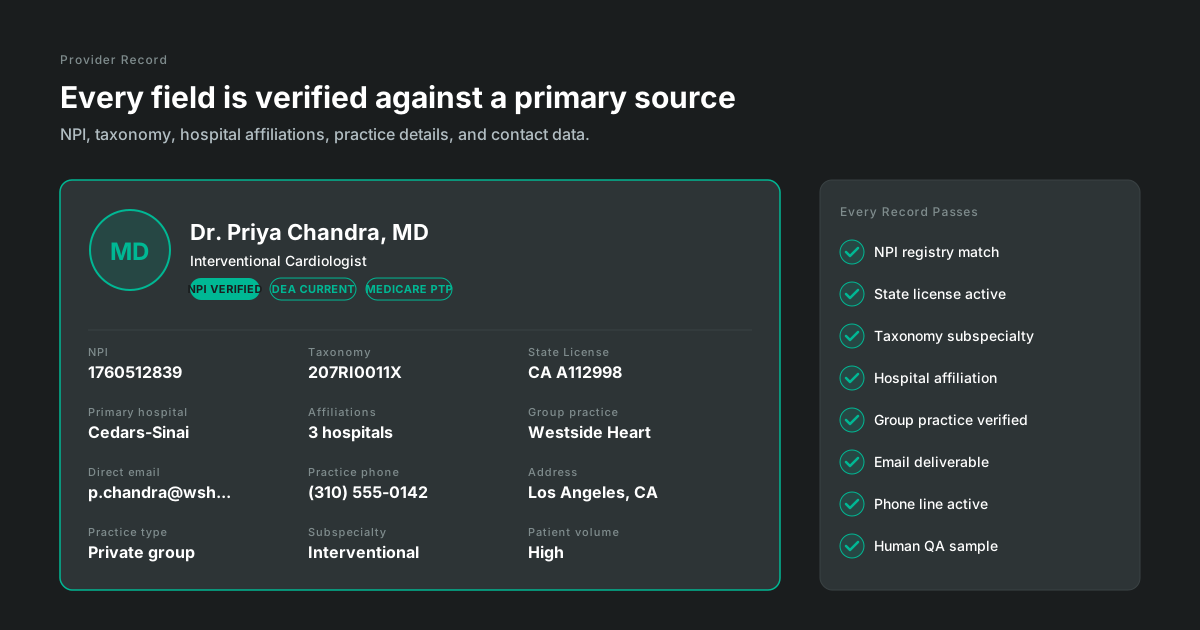
- NPI verification. Practice and individual PT NPIs validated.
- Ownership classification. Independent, PE-backed, hospital, POPTS, etc.
- Corporate affiliation. Parent company for chain-owned locations.
- Specialty focus. Orthopedic, sports, neuro, peds, etc.
- Decision-maker identification. Owner, clinic director, regional manager, whoever has purchasing authority.
- Location verification. Current address, multi-location practice flagging.
What You Get
You receive clinic and decision-maker records with the requested fields, source notes, and uncertain matches marked for review.
Per practice location:
- Practice/location name
- NPI (verified)
- Ownership type
- Parent company (if chain)
- Specialty focus
- Address (verified)
- Phone
- Decision-maker contact
- Purchasing authority level
Per PT professional (optional):
- Full name and credentials
- NPI
- Practice affiliation
- Specialty certifications
Pricing
Physical therapy data services follow our healthcare pricing:
- Validation only: Quote eligible locations and checks in writing
- Validation plus enrichment: Quote requested fields, sources, and review rules
- Ownership classification: Included with enrichment
- New-practice detection: Define geography, qualifying event, evidence, and cadence
Common Questions
How do you track PT ownership changes?
PT ownership changes constantly as PE rolls up practices. We monitor acquisition announcements, state licensing changes, and practice name and branding changes to stay current.
Can you identify which EMR a PT practice uses?
Often yes, especially for larger practices. PT-specific EMRs like WebPT, Prompt, and Clinicient are common and frequently identifiable from job postings, integrations, and public web signals.
Do you include occupational therapy practices?
Many PT practices also offer OT. We can flag combined PT/OT practices or provide OT-specific lists if that's your target market.
What about home health PT?
Home health is a different market with different data sources. We can include it, but it requires separate targeting criteria.
Can you build a list of cash-pay PT clinics?
Yes. Cash-pay and hybrid clinics rarely self-identify in registries, so we classify them from published pricing pages, insurance participation language, and Medicare enrollment status. Expect this segment to skew toward sports and pelvic health practices.
How do you tell an independent clinic from a chain location?
Branding alone is unreliable because acquired clinics often keep their local name. We resolve each location against corporate parent records, shared web infrastructure, and NPI organizational data before calling anything independent.
Target the Right PT Practices
PT's ownership fragmentation makes targeting difficult. We classify practices by ownership and specialty so you focus on locations where your sales approach can land.
Related: Orthopedic Data | New Practice Detection | All Healthcare Specialties