What Is Data Standardization?
Data standardization converts values in a field to an approved format while preserving the original. City names, phone numbers, and job titles each use a documented mapping rule, with ambiguous values sent to review.
It sits inside the broader discipline of CRM hygiene , next to deduplication and validation, and it's usually the cheapest fix with the most visible payoff.
The Data Standardization Mess
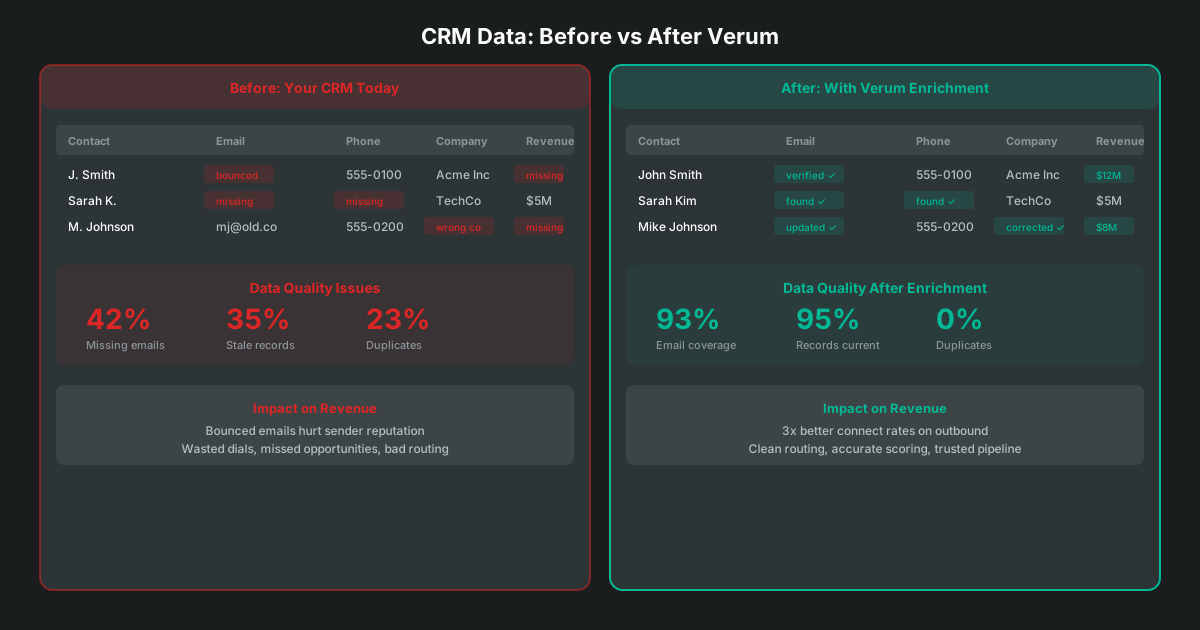
Your CRM has 'NYC,' 'New York,' 'New York City,' and 'new york' in the same field. Phone numbers appear as (555) 123-4567, 555-123-4567, 5551234567, and +1 555 123 4567. Job titles have thousands of variations for the same role. This inconsistency breaks everything downstream.
Reporting Requires Manual Cleanup First
Before you can run a report on 'contacts in New York,' someone has to identify each variation of New York in your data. And next quarter, new variations will have crept in.
Automation Rules Fail on Inconsistent Data
Your routing rule says 'if state equals California, assign to West Coast team.' But the field contains 'CA,' 'California,' 'Calif,' and 'Cali.' A quarter of your California leads go to the wrong team because the automation can only match what it's told to look for.
Integrations Break Silently
When data flows between your CRM, marketing automation, and BI tools, format inconsistencies cause silent failures. Records that don't match merge rules get skipped. Fields that exceed character limits get truncated. You don't find out until someone notices a gap in a report weeks later.
Manual Cleanup Is a Recurring Tax
Each quarter, someone on your team spends days cleaning up data formats. It's tedious, error-prone, and gets undone the moment new records enter the system. Without systematic standardization, you're paying the cleanup tax forever.
Which Fields Need Standardization Most?
Job titles often create the most visible routing conflicts. 'VP Marketing,' 'V.P., Marketing,' 'Vice President - Marketing,' and 'Marketing VP' can describe one role while producing different automation outcomes. Profile the distinct values in the submitted file, approve a taxonomy, and preserve the raw title beside the mapped function and seniority. Our Salesforce job-title standardization guide covers the workflow.
After titles, the usual offenders in order: states and countries, phone numbers, industry labels, and company names ('IBM' vs 'I.B.M.' vs 'International Business Machines'). Here's what each looks like before and after:
| Field, as found | Standardized output |
|---|---|
| Sr. VP Mktg / SVP, Marketing / Senior Vice Pres Marketing | SVP Marketing, seniority = VP+, function = Marketing |
| CA / Calif / california / CA. | California (ISO code CA in a paired column) |
| For example: (555) 123-4567 / 555.123.4567 / 5551234567 | For example: +15551234567 (E.164) |
| Software / SaaS / Computer Software / Tech | Software mapped to the team's chosen industry taxonomy |
| IBM Corp. / I.B.M. / International Business Machines | IBM, registered name preserved in a separate column |
How Does Verum Standardize Your Data?
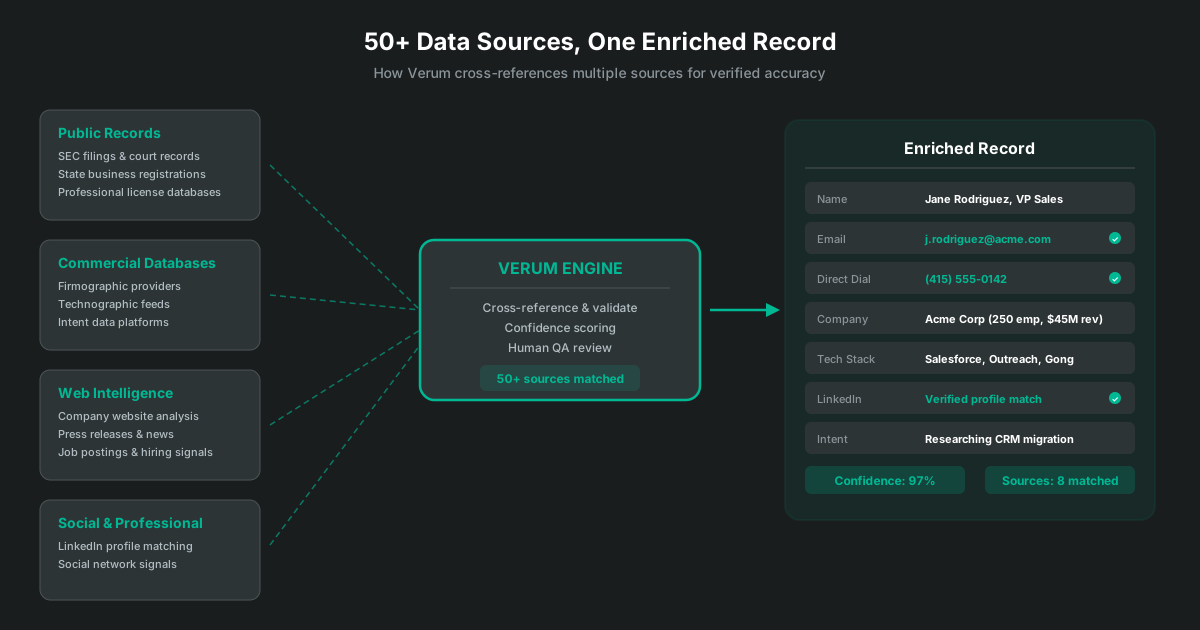
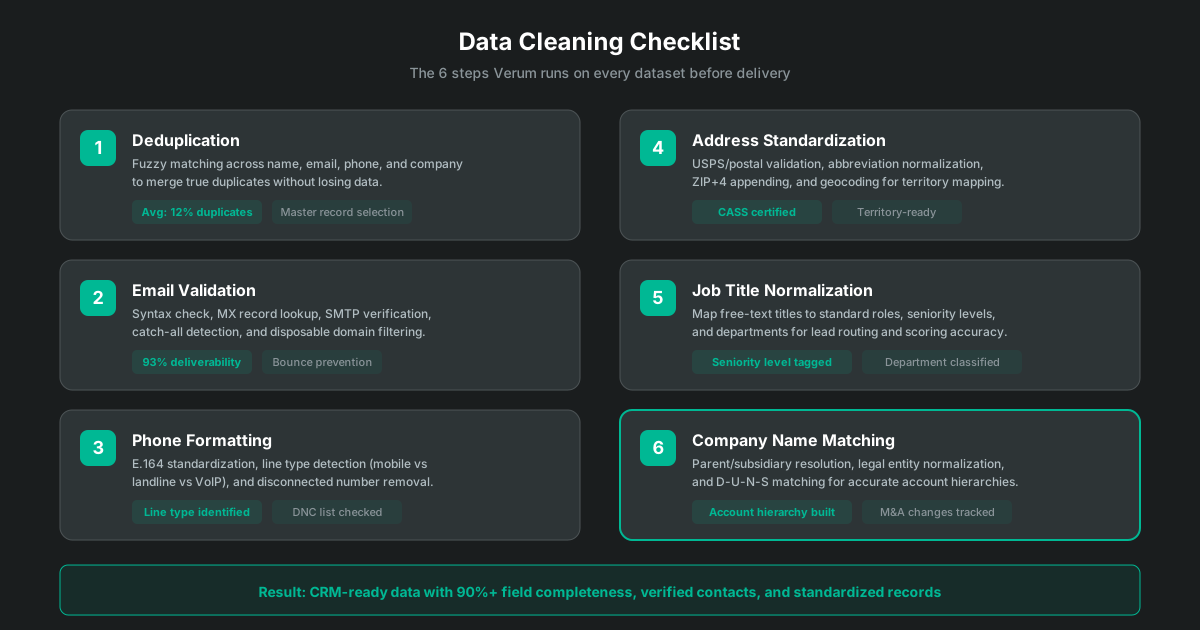
We standardize each field in your database to consistent formats. Phone numbers get normalized. Addresses get USPS-standardized. Titles get mapped to a taxonomy. States, countries, and industries get unified. The result is a database where automation, reporting, and integrations work.
Field‑by‑Field Standardization
Each field type has specific normalization rules. Phone numbers use the approved international format, addresses use the selected postal standard, and titles map to a documented role taxonomy.
For your team: After standardization, your routing rules, reporting queries, and integration mappings work correctly without the manual workarounds you've been maintaining.
Custom Rules for Your Data
Each database has unique conventions. If your team uses specific title categories, industry labels, or regional conventions, we build custom standardization rules that match your internal standards.
Human QA on Everything
Automation handles rules with unambiguous inputs. Abbreviations, international formats, compound names, and conflicting mappings go to a separate human-review queue.
What Teams Do With Data Standardization
- Reporting correctness. Run reports on clean, consistent data without spending hours normalizing fields first.
- Automation reliability. Make your routing rules, workflows, and integrations work correctly by feeding them standardized data.
- Integration compatibility. Ensure data flows cleanly between CRM, marketing automation, BI tools, and other platforms.
- Lead routing precision. Route leads correctly by standardizing the fields your routing rules depend on.
- Data migration prep. Standardize data before migrating to a new system so you don't import formatting problems.
The Process, Start to Finish
Step 1: Free Assessment (5 minutes)
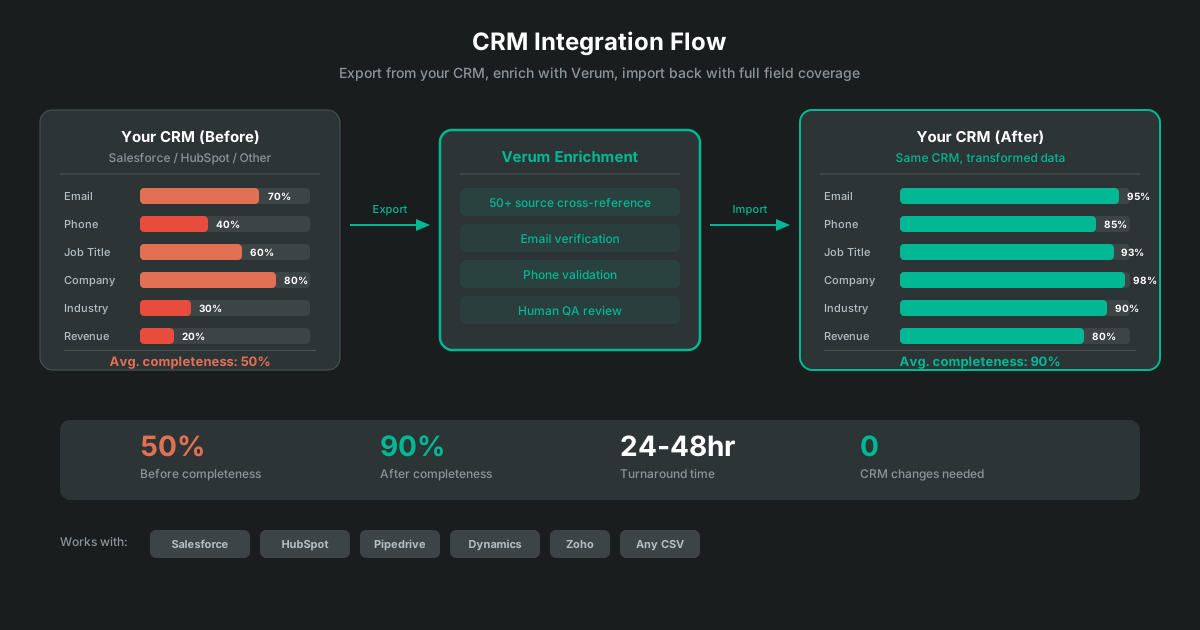
Upload a sample file or tell us what you need. We'll review your data and tell you exactly what we can do, with expected match rates and timelines for data standardization.
Step 2: Discovery Call (30 minutes)
We'll walk through your current stack, data sources, and goals. No sales pitch. Just a technical conversation about your data.
Step 3: Data Analysis (on us)
We run a free analysis on a sample of your records so you can see results before committing to anything.
Step 4: Full Engagement
Once you approve the sample results and written scope, we process the full dataset under the agreed rules and schedule.
Step 5: Ongoing (if you want it)
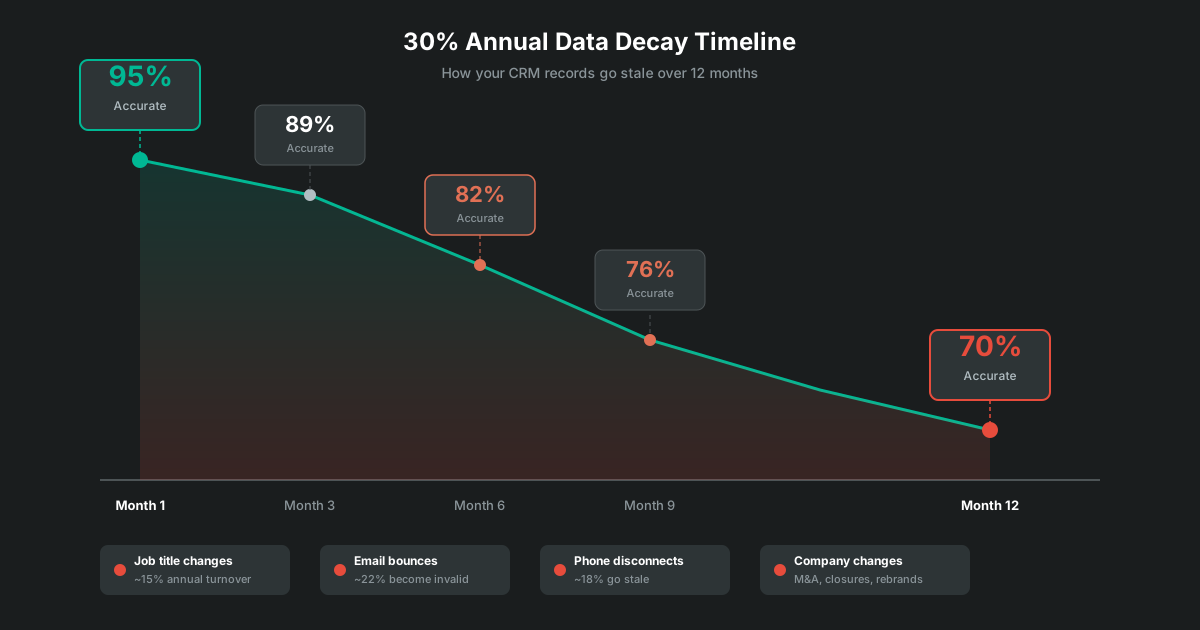
Compare dated snapshots to measure which fields change in your own system, then set a review cadence from the observed drift. Any ongoing work is scoped in a written agreement.
Why Teams Choose Verum for Data Standardization
- You don't touch a platform. There's no dashboard to learn. Email us a CSV, we email back clean data.
- Schedule tied to scope. The written project plan sets timing after the file, requested fields, exception rules, review capacity, and delivery format are known.
- Human QA on each project. AI is fast but imperfect. Our team reviews each delivery before you see it.
- No long-term agreements. Per-project pricing. Use us once or set up a recurring schedule. No annual commitments.
- We know data standardization. We've cleaned millions of records. Our team handles the edge cases that automated tools get wrong.
The Old Way vs. With Verum
| The Old Way | With Verum |
|---|---|
| Several variations of the same state name | One standardized format across records |
| Phone numbers in inconsistent formats | One documented format for each number |
| Hours of manual cleanup before reporting | Reports run instantly on clean, consistent data |
| Integration errors from format mismatches | Clean data flows between systems without errors |
| New records break existing standards | Validation rules catch format issues at entry |
Common Questions About Data Standardization
How long does data standardization take?
The written scope sets the schedule after we review the record count, requested standards, protected fields, exception rules, manual-review queue, and delivery format.
Can you standardize to our custom format?
Yes. If your team has specific conventions for titles, industries, regions, or other fields, we'll build custom standardization rules that match your internal standards.
Will standardization change the actual data?
Standardization changes the format rather than the meaning. 'NYC' becomes 'New York' and '(555) 123-4567' becomes '+15551234567,' but the underlying data stays the same. We preserve original values in a separate column if you want them.
How is this different from buying a data-platform license?
Sales-intelligence products and managed standardization serve different workflows. Check current vendor materials and a dated proposal, then test each option with the same fields, input sample, provenance rules, and export requirements.
What's the difference between data standardization and data cleansing?
Cleansing removes bad records: duplicates, invalid emails, dead accounts. Standardization fixes the format of the records you keep. Most projects need both, and we run them in that order, because there's no point standardizing a duplicate you're about to delete. Our data validation service covers the cleansing side.
Can you standardize job titles for lead routing and seniority mapping?
Yes. We map raw title strings to a role taxonomy with separate seniority and function fields, so titles such as 'Chief Evangelist' and 'VP Marketing' resolve to categories your routing rules can use. We report the distinct input and output values for your file instead of promising a general compression rate.
Ready to Fix Your Data?
Not sure yet? Send us a sample. We'll run a free quality assessment showing duplicates, invalid emails, and format issues. No commitment.
Ready to go?
Related: All Cleaning | Data Cleaning Services | Data Deduplication | Database Cleanup