What Is B2B Data Deduplication?
B2B data deduplication is the process of finding records in your CRM or marketing database that describe the same person or company, then merging them into one record that keeps the best value for each field. It sounds mechanical. In practice it's mostly judgment calls: is "IBM" the same account as "IBM Global Services"? Is the John Smith who filled out your webinar form the same John Smith your SDR imported from a list two years ago?
Measure the duplicate backlog and new-candidate inflow against a dated baseline. Set the acceptable threshold from routing, attribution, reporting, and review needs rather than a generic percentage.
The Duplicate Records Problem
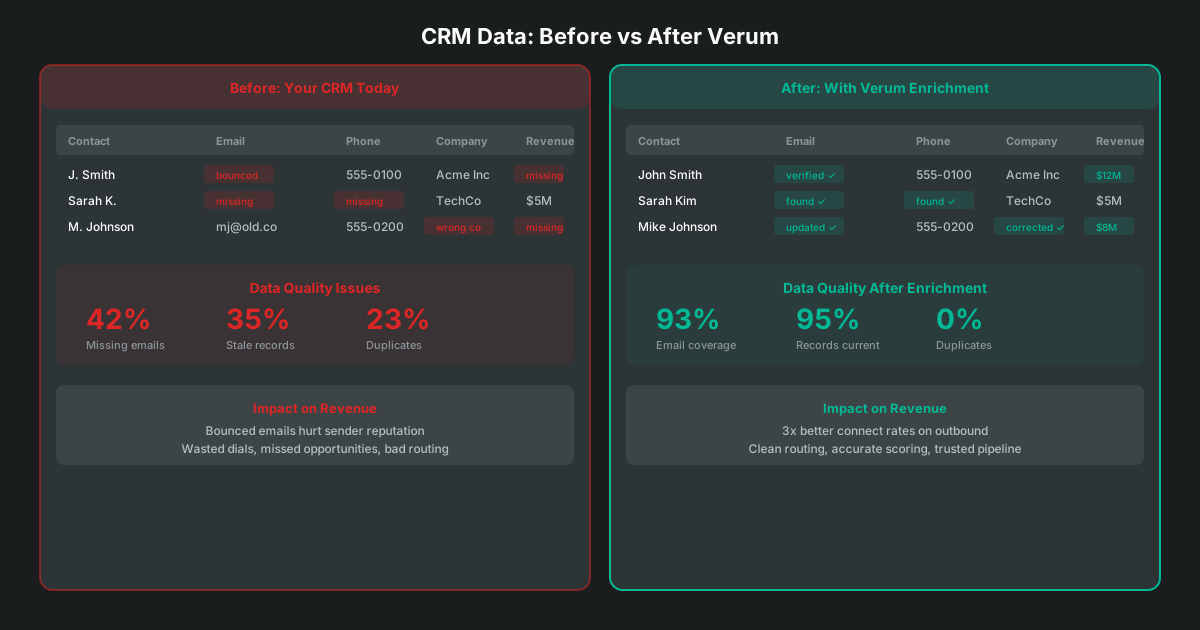
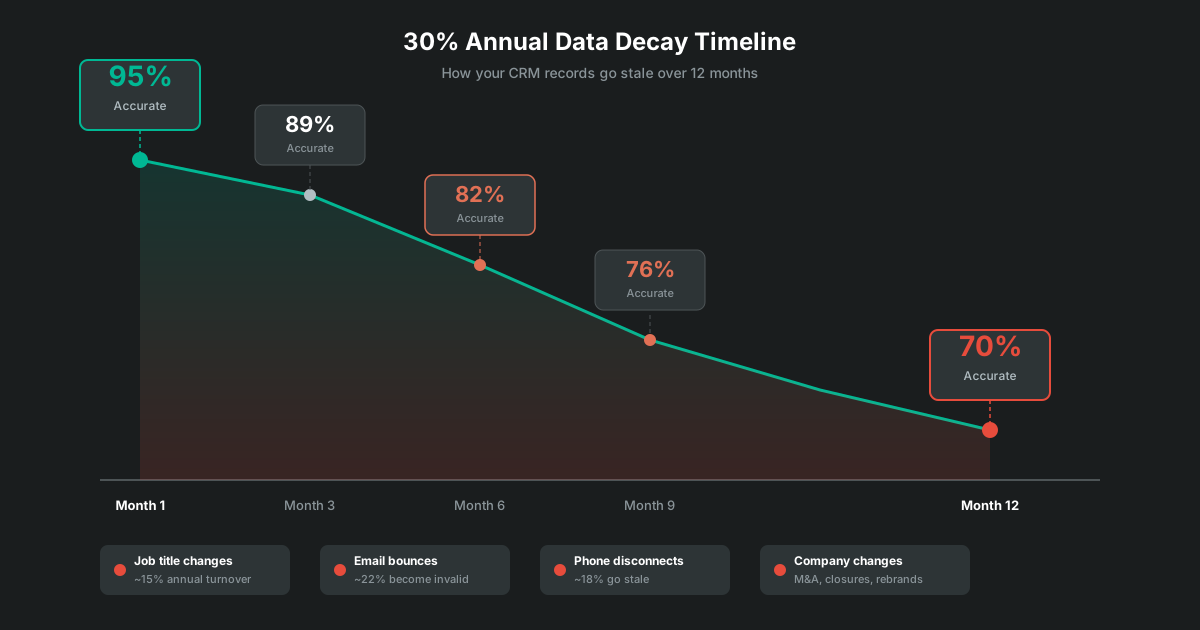
That means a quarter of your CRM is noise. Reps call the same prospect twice. Marketing sends the same person three emails. Reports inflate pipeline by counting the same deal under different spellings of the company name.
Duplicates Erode Trust in Your Data
When reps encounter duplicate records, they stop trusting the CRM. They build their own spreadsheets. They stop logging activities. The CRM becomes a reporting tool nobody believes in, and your investment in it drops in value each quarter.
Lead Routing Breaks Down
Duplicate leads can be assigned to different representatives, split engagement history, and create conflicting ownership. Measure affected records and routing exceptions directly rather than attaching an industry-wide revenue estimate.
Marketing Metrics Become Unreliable
Duplicates inflate list sizes and can skew engagement rates or segmentation when the denominator counts the same person more than once. Report both record-level and deduplicated-person denominators so downstream metrics remain interpretable.
Merging Is Harder Than It Looks
Finding duplicates is only half the problem. Merging them requires deciding which record has the best email, the most recent title, the correct phone number. Manual merge projects take weeks and introduce new errors. Automated dedup without rules loses data.
How Verum Handles Data Deduplication
We find, flag, and merge duplicate records across your entire database. Our matching algorithm handles spelling variations, abbreviations, and format differences that simple exact-match dedup misses. You choose the merge rules. We execute them at scale.
Fuzzy Matching Beyond Exact Duplicates
Exact-match dedup catches 'John Smith' duplicated twice. Fuzzy matching catches 'John Smith' and 'Jon Smith' and 'J. Smith' at the same company. Our algorithms use name, company, email, phone, and address data to identify duplicates that simpler tools miss.
For your team: We present a dedup report showing each match pair with confidence scores before merging anything. You approve the rules. We execute at scale.
Smart Merge Logic
When two duplicate records have conflicting data, which email do you keep? Which phone number? Which title? We use recency, source reliability, and completeness scores to pick the best value for each field. No data loss. No guesswork.
Human QA on Everything
Automated dedup catches most duplicates. But edge cases (parent company vs. subsidiary, same person at two companies, shared office addresses) need human judgment. Our team reviews flagged pairs before any merge is executed.
Which Matching Method Catches Which Duplicates?
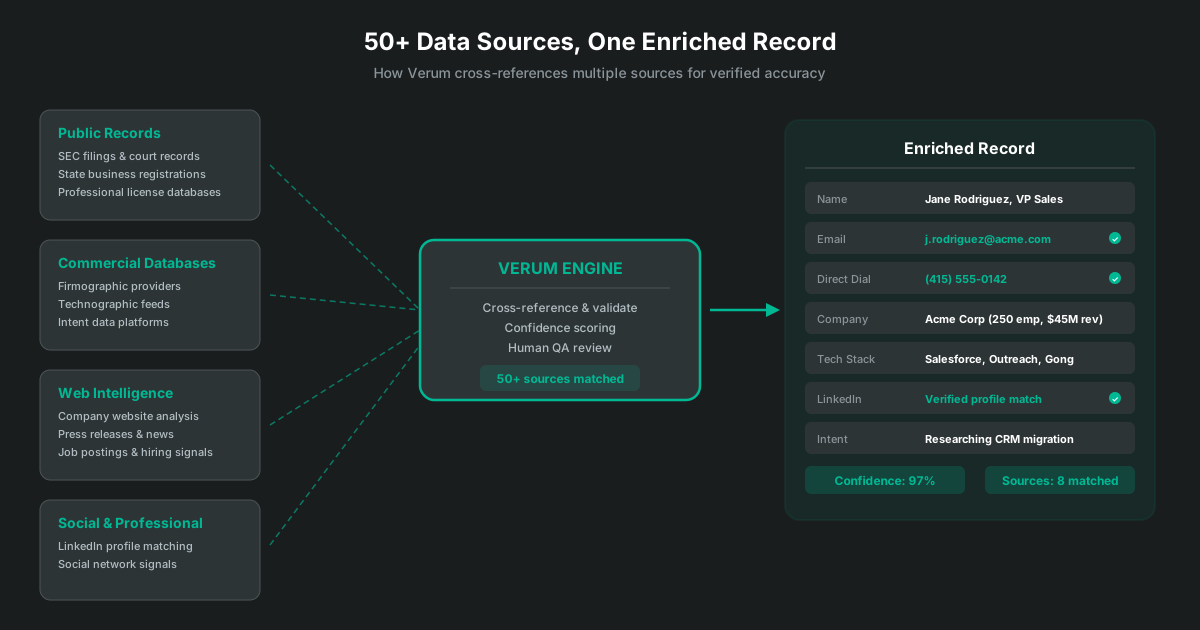
Each dedup tool advertises "smart matching." The useful question is what each matching layer catches and what it misses. Here's how the layers stack up on a typical B2B contact database:
| Method | Catches | Misses |
|---|---|---|
| Exact email match | Same address entered twice | Same person with work and personal emails |
| Name + company fuzzy match | Jon/John, Corp/Corporation, typos | Name changes, company rebrands |
| Phone match | Same direct dial across records | Shared office mainlines flag false pairs |
| Domain + name match | Work email variants at one company | Franchises and subsidiaries on shared domains |
| Human review | Parent vs. subsidiary, job changers, false positives | Nothing at the pair level, which is why we do it |
Exact email matching alone finds maybe half the duplicates in a typical database. Layered matching plus review is how you get the other half without merging two different people named Chris Lee into one record. That mistake is worse than the duplicate was.
What Teams Do With Data Deduplication
- CRM correctness. Remove duplicates before they confuse reps, distort reports, or cause embarrassing double-outreach to prospects.
- Pre-migration cleanup. Deduplicate before migrating to a new CRM so you start fresh instead of moving the mess.
- Post-import dedup. After importing a purchased list or event leads, deduplicate against your existing database to avoid duplicates.
- Accurate pipeline reporting. Eliminate duplicated opportunities and contacts that inflate pipeline numbers and distort forecasting.
- Marketing list hygiene. Remove duplicates from email lists so contacts don't receive the same campaign multiple times.
Five Steps to Clean Data
Step 1: Free Assessment (5 minutes)
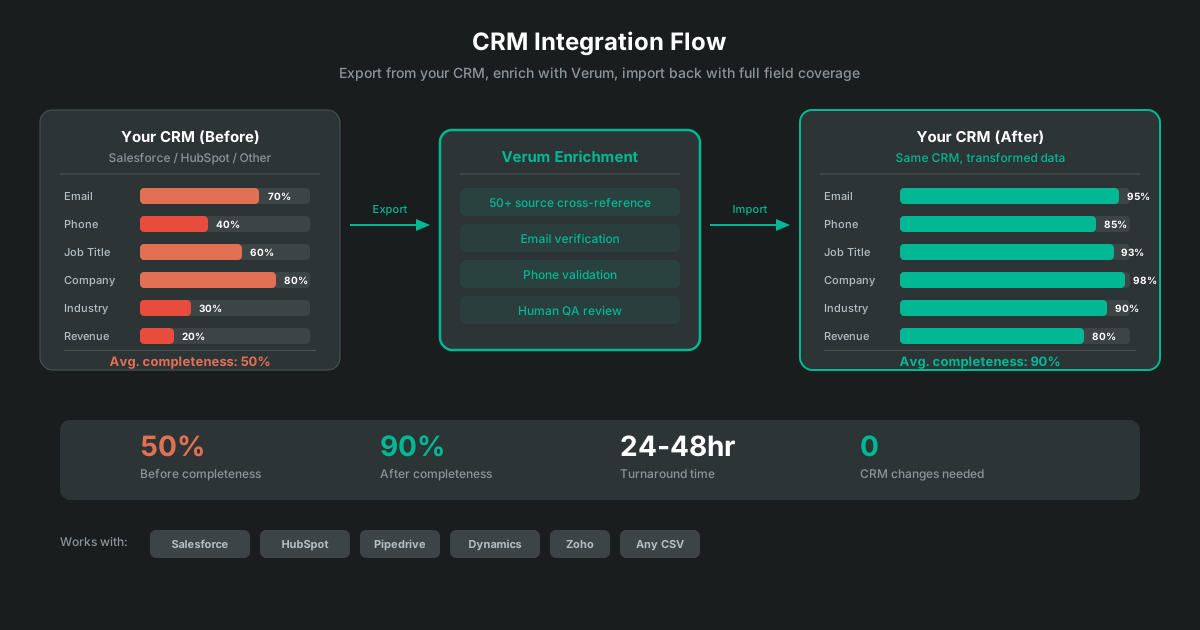
Upload a sample file or tell us what you need. We'll review your data and tell you exactly what we can do, with expected match rates and timelines for data deduplication.
Step 2: Discovery Call (30 minutes)
We'll walk through your current stack, data sources, and goals. No sales pitch. Just a technical conversation about your data.
Step 3: Data Analysis (on us)
We run a free analysis on a sample of your records so you can see results before committing to anything.
Step 4: Full Engagement
Once you approve the sample results and written scope, we process the full dataset under the agreed match rules and schedule.
Step 5: Ongoing (if you want it)
Compare dated snapshots to measure which fields change in your own system, then set a review cadence from the observed drift. Any ongoing work is scoped in a written agreement.
Why Teams Choose Verum for Data Deduplication
- We do the work. You don't log into a platform. Send us your data, we send back enriched records.
- Back to you in a day or two. Verum confirms project scale, timing, and acceptance checks after reviewing the submitted file; publishing an outcome requires an attributable project record.
- Humans review the output. Automated tools miss things. We catch them.
- Month-to-month or one-off. We earn your business each time. No six-figure annual deal needed.
- We know data deduplication. We've cleaned millions of records. Our team handles the edge cases that automated tools get wrong.
The Old Way vs. With Verum
| The Old Way | With Verum |
|---|---|
| Manual dedup, record by record | Automated fuzzy matching across your entire database |
| Merge logic based on whoever gets there first | Smart merge rules that preserve the best data |
| Duplicates reappear after every import | Ongoing dedup catches new duplicates as they enter |
| Duplicate records inflate database totals | Clean, unique records with documented merge decisions |
| Reporting inflated by duplicate counts | Accurate metrics based on deduplicated data |
Common Questions About Data Deduplication
How long does data deduplication take?
The written scope sets the schedule after we review the record count, match rules, protected fields, approval requirements, exception queue, and delivery format.
Will merging duplicates lose any data?
No. Our merge logic preserves the most complete and most recent value for each field. Before any merges execute, you review and approve the merge rules and see a preview of the results.
Can I review duplicates before they're merged?
Yes. the proposed scope lists a dedup report showing each match pair with confidence scores. You approve which pairs to merge and which to keep separate. Nothing merges without your approval.
How is this different from buying a data-platform license?
Sales-intelligence products and managed deduplication serve different workflows. Check current vendor materials and a dated proposal, then compare match rules, survivor logic, provenance, export rights, and the work left with your team.
Should I deduplicate before or after a CRM migration?
Before. Migrating duplicates means paying to move records you'll delete later, and most migration tools create even more duplicates when source systems overlap. Dedup the source data first, then migrate a clean set. If you've already migrated, dedup still works, it just has more history to untangle.
How do you avoid merging two different people into one record?
Confidence scoring plus human review. High-confidence pairs, like identical emails, merge under your approved rules. Ambiguous pairs, like two people with the same name at the same large company, get flagged for review instead of auto-merged. A wrong merge destroys two records, so we err on the side of keeping pairs separate.
How often should I run B2B data deduplication?
Run a duplicate check after bulk imports and measure how quickly new candidates appear between dated samples. Set the ongoing cadence from your actual intake volume, source mix, match rules, and tolerance for unresolved candidates.
Ready to Fix Your Data?
Not sure yet? Send us a sample. We'll run a free quality assessment showing duplicates, invalid emails, and format issues. No commitment.
Ready to go?
Related: All Cleaning | Data Cleaning Services | Email Validation | CRM Cleaning