The Email Quality Crisis
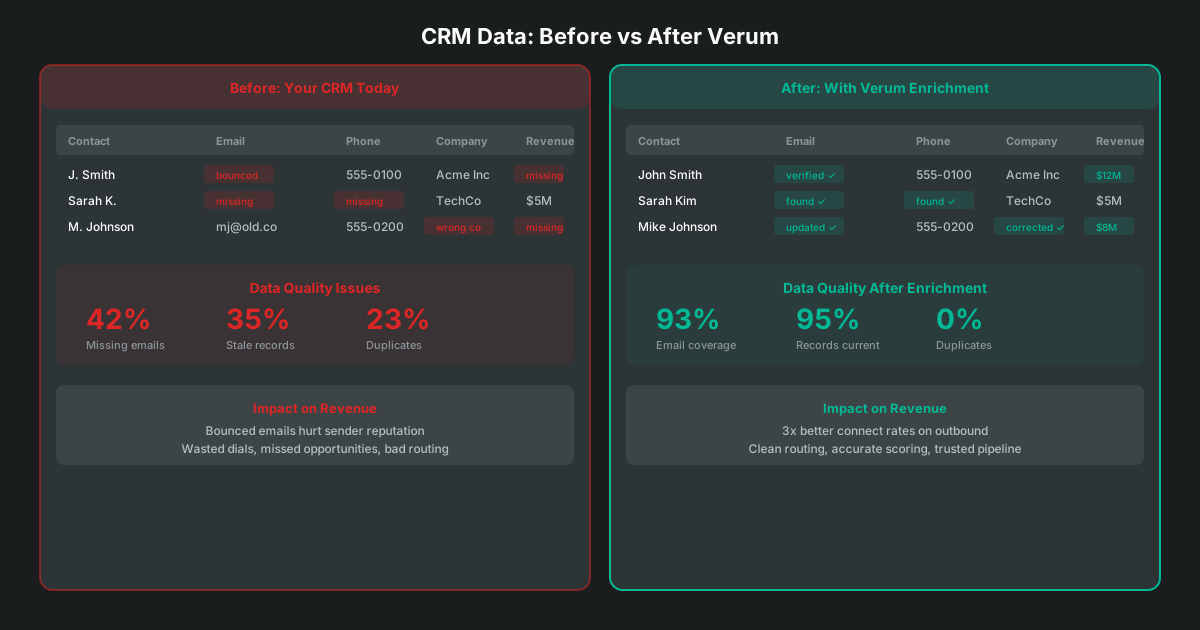
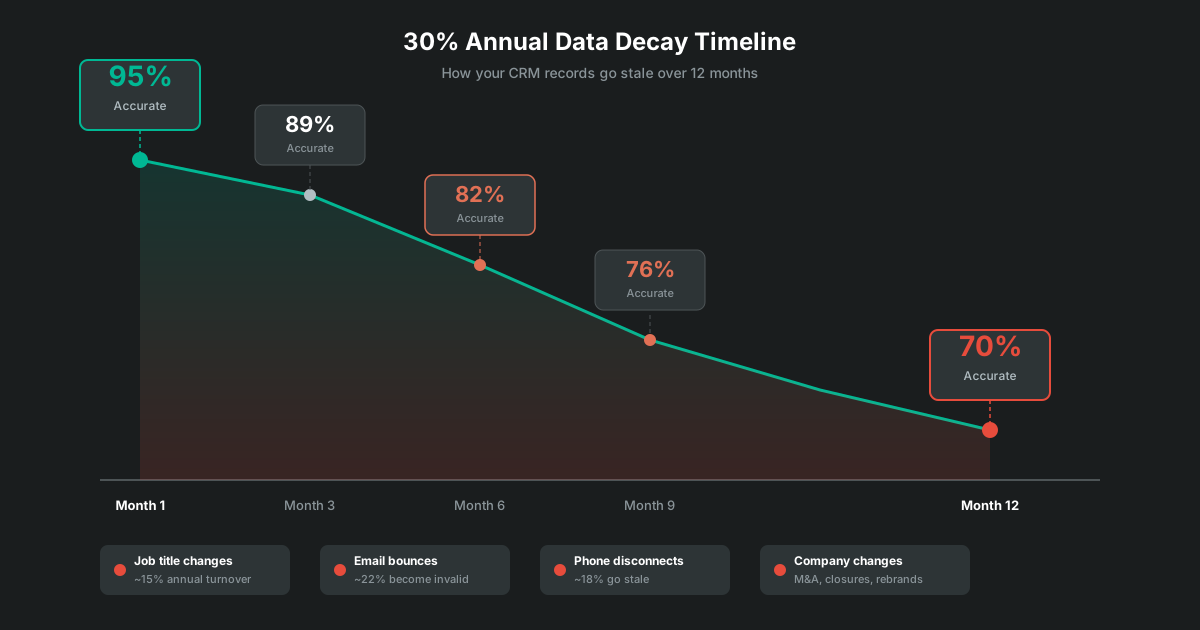
Email lists decay at 22.5% per year according to HubSpot. That means nearly a quarter of your email database is invalid right now. You're sending to addresses that bounce, damaging your sender reputation, and wasting every dollar you spend on email marketing.
Bounce Rates Destroy Sender Reputation
ISPs watch your bounce rate. Above 2%, you start getting flagged. Above 5%, you're getting throttled. Above 10%, your entire domain may be blacklisted. Once your sender reputation tanks, even your valid emails start landing in spam. Recovery takes months.
Invalid Emails Waste Campaign Budget
Every email sent to an invalid address costs you money in platform fees and opportunity cost. If you're running 50,000-record campaigns with a 15% invalid rate, that's 7,500 wasted sends per campaign. Over a year of weekly campaigns, that's hundreds of thousands of wasted sends.
Catch‑All Domains Hide Problems
Some domains accept all incoming email regardless of whether the address exists. Your ESP shows them as 'delivered' but nobody reads them. Without catch-all detection, you think your list is clean when 10-15% of your 'delivered' emails hit dead ends.
Role Addresses and Spam Traps
info@, sales@, admin@ addresses don't belong in B2B outreach sequences. Neither do recycled spam traps set up by ISPs to catch senders with bad list hygiene. Both lower your deliverability and can get you blacklisted.
How Verum Handles Email Validation
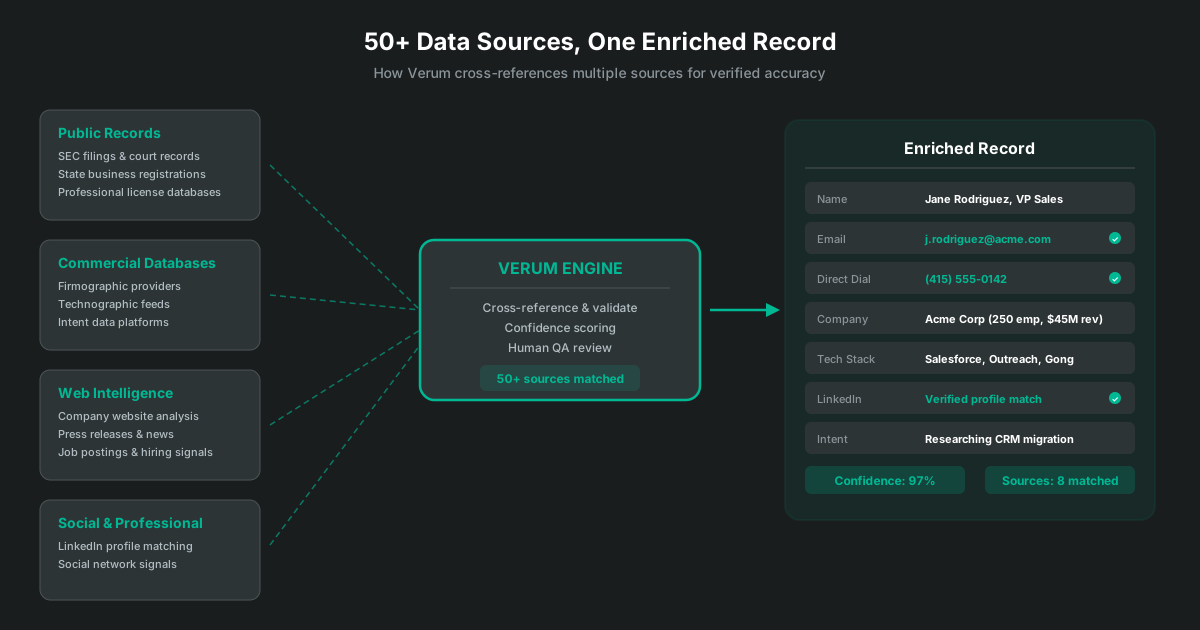
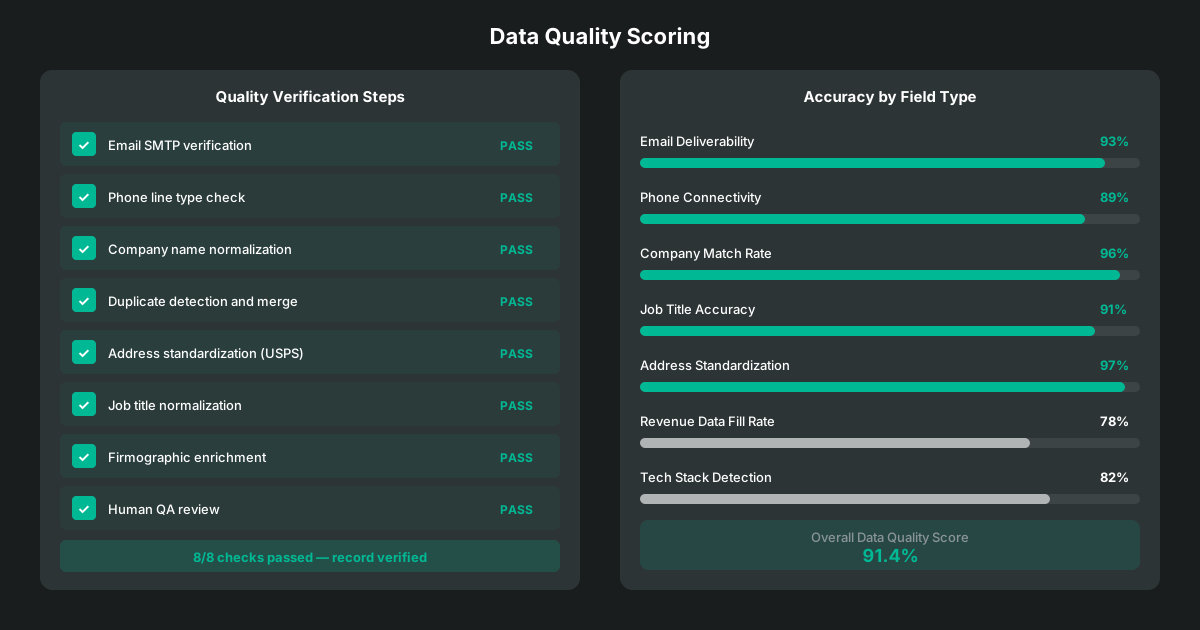
We validate every email address in your database using SMTP-level verification, syntax checks, domain analysis, and spam trap detection. You get back a clean list with status codes on every address.
SMTP‑Level Verification
We connect to the recipient mail server to verify each address exists and can receive mail, without actually sending a message. This catches invalid addresses that syntax checks alone would miss.
For your team: Every email comes back with a status: valid, invalid, catch-all, disposable, or role-based. You decide which statuses to keep in your campaigns.
Catch‑All and Disposable Detection
We flag domains that accept all incoming email (catch-all) and addresses from temporary email services (disposable). These require different handling than verified or clearly invalid addresses.
Human QA on Everything
Bulk verification tools produce false negatives on some legitimate enterprise domains. Our team reviews anomalous results, especially for high-value accounts, to prevent incorrectly removing valid addresses.
What Teams Do With Email Validation
- Pre-campaign cleaning. Validate your email list before every campaign to maintain sender reputation and maximize deliverability.
- Sender reputation protection. Remove invalid, disposable, and role-based addresses that drag down your deliverability scores.
- Re-engagement campaign prep. Validate dormant contact emails before re-engagement campaigns. No point nurturing bounced addresses.
- CRM hygiene. Flag invalid emails across your entire CRM so your data team can prioritize re-enrichment for high-value contacts.
- Compliance. Verify email consent records against valid addresses. Invalid emails with opt-in records indicate potential data quality issues.
How to Get Started
Step 1: Free Assessment (5 minutes)
Upload a sample file or tell us what you need. We'll review your data and tell you exactly what we can do, with expected match rates and timelines for email validation.
Step 2: Discovery Call (30 minutes)
We'll walk through your current stack, data sources, and goals. No sales pitch. Just a technical conversation about your data.
Step 3: Data Analysis (on us)
We run a free analysis on a sample of your records so you can see results before committing to anything.
Step 4: Full Engagement
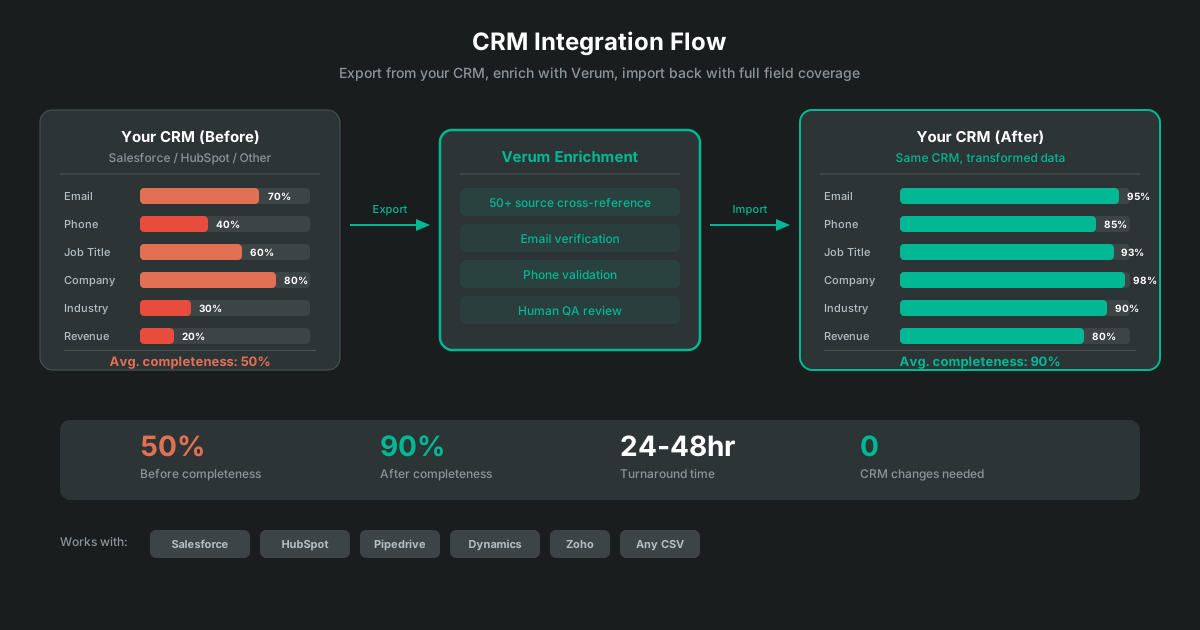
Once you approve the sample results, we process your full dataset. Most projects complete in 24‑48 hours.
Step 5: Ongoing (if you want it)
Data decays at 30% per year. We offer quarterly or monthly re‑enrichment to keep your records current. No long‑term contracts required.
Why Teams Choose Verum for Email Validation
- No self-serve tools to manage. We do the research, the cleaning, and the validation. You get a finished file.
- Fast turnaround. Most projects complete in 24-48 hours. Larger datasets may take 3-5 business days.
- A person checks everything. AI handles the volume. A human reviews edge cases before we deliver.
- No annual contract. Start with one project. If the results are good, keep going. If not, you're not stuck.
- We know email validation. We've cleaned millions of records. Our team handles the edge cases that automated tools get wrong.
The Old Way vs. With Verum
| The Old Way | With Verum |
|---|---|
| Send and hope for the best | Every address SMTP‑verified before send |
| 15‑25% bounce rates on cold lists | Under 3% bounce rate after validation |
| Sender reputation slowly degrading | Reputation protected by clean list hygiene |
| Catch‑all domains showing false 'delivered' | Catch‑all detection flags unreliable deliveries |
| Annual email cleanup (maybe) | Continuous validation on new records, quarterly refresh |
Common Questions About Email Validation
How long does email validation take?
Most projects complete in 24-48 hours for databases under 100,000 records. Larger databases may take 3-5 business days. We'll give you an exact timeline after reviewing your data.
What's the difference between validation and verification?
Validation checks the format and syntax of an email address. Verification goes further by connecting to the mail server to confirm the address exists and can receive mail. We do both.
Will this affect my sender reputation?
No. Our verification process doesn't send actual emails. We check at the server level whether addresses exist without triggering bounce or complaint signals.
How is this different from buying a ZoomInfo license?
ZoomInfo sells access to a contact database. We clean the data you already have. They charge $15K-$50K+/year per seat. We charge per project with no annual contract. And when you cancel ZoomInfo, you lose the data. With us, the enriched records are yours to keep.
Try Us on 20 Records, Free
Not sure yet? Send us a sample. We'll run a free quality assessment showing duplicates, invalid emails, and format issues. No commitment.
Ready to go? We'll have clean data back to you in 24-48 hours.
Related: All Cleaning | Data Cleaning Services | Data Deduplication | Email Enrichment