Definition
Net-new contact is a contact record that doesn't already exist anywhere in your database, in any form. It enters through prospecting, list purchases, events, or inbound capture. The "net" is doing the work in that phrase: a record only counts as net-new after deduplication confirms nothing in your CRM already matches it.
That second clause is where most of the arguments happen. Whether those 1,800 count as net-new determines what you pay, which is why the definition matters commercially and technically.
Where Do Net-New Contacts Come From?
Net-new contacts come from primary business sources, licensed datasets, public records, referrals, and direct research.
Four channels, each with its own quality profile.
- Outbound prospecting. Reps and SDRs sourcing people one at a time from LinkedIn, directories, and company sites. Slow but high-intent, since someone chose each record for a reason.
- Check current official vendor materials and a dated proposal, then test each option with the same representative sample, field list, provenance rules, and export requirements.
- Events and content. Badge scans, webinar registrations, gated downloads. High engagement, low data quality. People type "asdf" into company fields at trade shows.
- Inbound capture. Demo requests and signups. Preserve source and consent evidence, then measure qualification and conversion on a dated cohort.
Most teams blend four. The mix matters less than what happens at the boundary: each channel needs the same dedupe and validation step before records land in the CRM, or the channels start creating duplicates of each other.
Net-New Contact vs. Net-New Lead vs. Net-New Logo
The three terms get swapped around in pipeline meetings and they measure different things.
A net-new contact is any new person record. No intent implied. A net-new lead is a new person with a qualifying signal, a form fill, an ICP match, a hand-raise. A net-new logo is a new company on the customer list, which might involve dozens of contacts or just one.
The distinction shows up in reporting. Marketing can add 20,000 net-new contacts in a quarter while generating zero net-new logos. If your dashboard only tracks contact counts, database growth can mask a pipeline that isn't moving. Count contacts for coverage, leads for demand, logos for revenue.
How Do You Verify a Contact Is Net-New?
Dedupe against everything you already own, using match logic that's neither too loose nor too strict.
Email-only matching is the common default and it misses the most common real-world case: the same person at a new job. [email protected] and [email protected] are one human and two records. Match on name plus company domain and you catch job changes but risk merging two different people named Jane Chen. Production-grade matching layers several keys and scores the result, the same technique described in our record matching entry.
The verification step has a billing consequence. Vendors that charge per net-new contact dedupe their delivery against a suppression file you provide. If that file is a stale CRM export, or the vendor's match logic is loose, you pay for records you already had. Ask any data vendor two questions before signing: what fields do you match on, and what happens to near-misses.
What Does a Net-New Contact Cost?
A provider should quote the requested audience, fields, source requirements, validation method, unmatched-record policy, exceptions, and delivery format in writing. Compare the total scoped charge and accepted output rather than applying a generic per-contact benchmark.
Verum prepares a written, scope-specific quote and schedule after reviewing the records, requested checks, exception rules, and delivery format. Measure change against a dated baseline instead of applying a general decay benchmark, then set the review cadence from the changes observed in your own system. A high bounce rate wastes outreach and can damage sender reputation, so the written scope should state when addresses were validated and how uncertain results are handled.
Example
In a hypothetical staffing campaign, the buyer defines practice managers and owners at outpatient clinics in a named geography, then exports existing CRM contacts as a suppression file.
The hypothetical vendor returns candidate records, applies the approved email and name-plus-domain matching rules, excludes existing contacts, and validates the remaining work emails. The delivery reconciles candidates, exclusions, invalid addresses, and accepted net-new contacts.
The campaign result should be measured against a dated comparison cohort using the same channel and message. That separates the effect of suppression and validation from unrelated changes in creative or audience.
Common Mistakes
- Buying volume before fixing hygiene. Pouring 50,000 purchased contacts into a CRM full of duplicates multiplies the mess. Clean first, then add. The sequencing logic is the same one behind CRM hygiene programs.
- Treating acquisition as a one-time fix. People change jobs, companies close, phone numbers get reassigned. A net-new contact from last year has decent odds of being stale today.
- Using a single data source. No vendor gets everything right. One source might have the right email but the wrong title, and another the opposite. Cross-referencing catches what a single feed misses.
- Trusting automation without review. Automated matching can handle clear records; ambiguous identities, recent role changes, and conflicting sources need a documented review decision.
Frequently Asked Questions
What is a net-new contact?
A net-new contact is a contact record that doesn't already exist anywhere in your database, in any form. It arrives through prospecting, list purchases, events, or inbound capture, and it only counts as net-new after deduplication confirms no existing record matches it.
What is the difference between a net-new contact and a net-new lead?
A net-new contact is any new person record, regardless of buying intent. A net-new lead is a new person who has shown some qualifying signal, like filling out a form or matching your ICP. Each net-new lead is a net-new contact, but most net-new contacts rarely become leads.
How do vendors decide what counts as net-new?
They dedupe their delivery against a suppression file you provide, usually a CRM export keyed on email address, and sometimes on name plus company domain. Anything that survives the dedupe is billed as net-new. The match logic matters: a loose email-only match lets job-changers through as duplicates, while a strict match can bill you twice for the same person.
How much does a net-new contact cost?
Request current written quotes for the same eligible audience, requested fields, provenance, validation rules, exclusions, and unmatched-record policy. Compare quoted total divided by accepted records.
Why do purchased net-new lists bounce so much?
Validate at delivery time, retain the source date and result category, and compare later changes with that baseline. Set the next review from observed field changes and campaign timing rather than a generic age cutoff.
How does Verum handle net-new contacts?
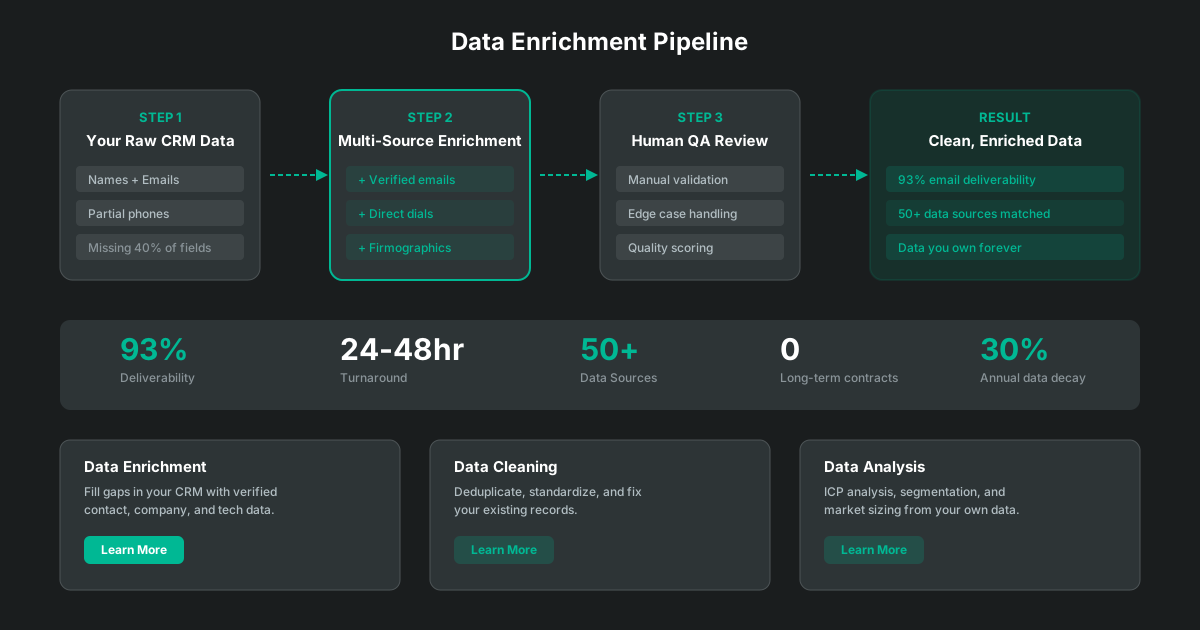
We build net-new contact lists against your ICP, dedupe them against your existing CRM before delivery, and validate each email. You only receive records you don't already have, in a CRM-ready file.
Related Terms
Related: All Glossary Terms | Enrichment Services | Cleaning Services