Definition
Entity Resolution is determining when two or more records in a dataset refer to the same real-world entity, even with variations in how the entity is represented.
Why It Matters
About 30% of B2B data goes bad every year. People change jobs, companies close, phone numbers get reassigned. If entity resolution isn't part of your regular process, your CRM data drifts further from reality every quarter. Gartner puts the average cost of poor data quality at $15 million annually for large companies. For smaller teams, it shows up as bounced emails, misrouted leads, and reps wasting time on dead contacts.
When entity resolution breaks down, everything built on that data breaks too. Lead scoring produces noise. Pipeline forecasts miss. Segmentation targets the wrong accounts. The fix isn't complicated, but it does need to be ongoing.
How It Works in Practice
The process depends on what your data actually needs, but at a high level:
- Look at what you have. We assess your current data for gaps, inconsistencies, and quality issues specific to entity resolution.
- Fix what's broken. That might mean pulling from external sources, validating against reference databases, or standardizing formats that are all over the place.
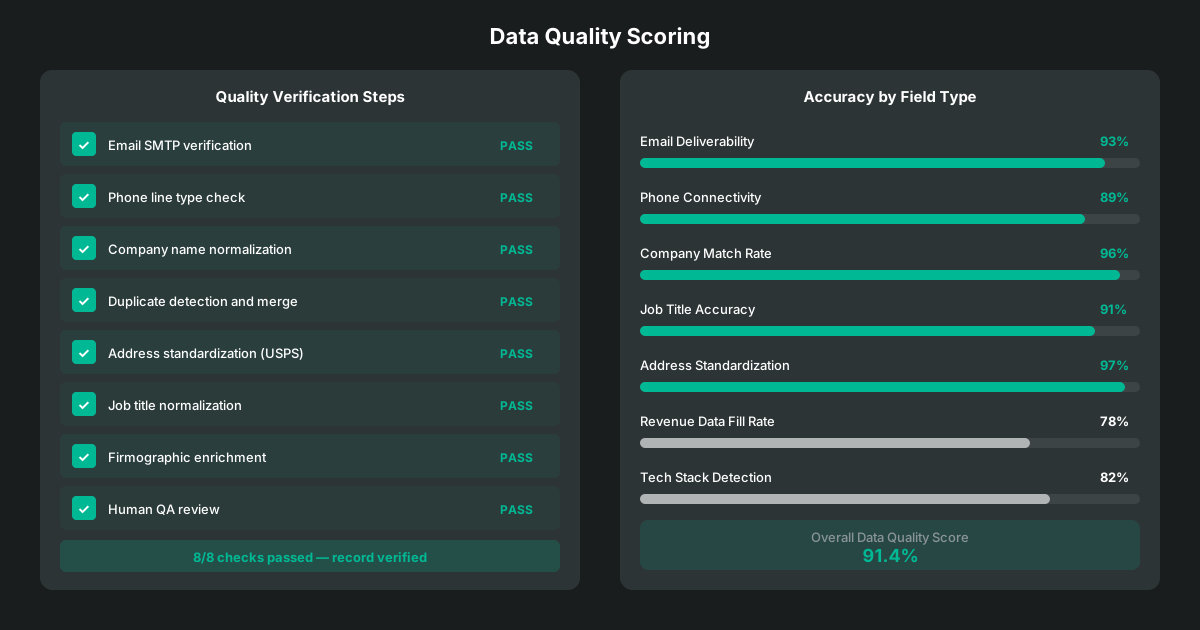
- Verify the results. Cross-reference against multiple sources. Our team reviews edge cases that automated matching gets wrong.
- Deliver clean data. CRM-ready files you can import immediately. No reformatting needed.
- Keep it clean. Data decays at 30% per year. Periodic refreshes prevent the work from going stale.
Example
Your CRM has 50,000 records. After applying entity resolution, you discover that 15% need attention. Fixing those 7,500 records before your next campaign prevents bounces, misroutes, and wasted spend.
Common Mistakes
- Treating it as a one-time fix. Data doesn't stay clean. People change jobs, companies move, phone numbers get reassigned. If you cleaned your data six months ago and haven't touched it since, a chunk of it has already gone stale.
- Using a single data source. No single vendor gets everything right. We pull from 50+ sources and cross-reference because one source might have the right email but the wrong title, and another might have the opposite.
- Trusting automation without review. Automated tools handle most records fine. But the tricky ones, like two "John Smith" entries at the same company, or a contact who just switched roles, need a person to make the call.
Frequently Asked Questions
What is entity resolution?
Determining when two or more records in a dataset refer to the same real-world entity, even with variations in how the entity is represented.
Why does entity resolution matter for B2B teams?
B2B data decays at 30% per year. Without entity resolution, your database loses accuracy every month. Clean, complete data drives better targeting, higher conversion rates, and more accurate reporting.
How does Verum help with entity resolution?
We handle entity resolution as part of our data cleaning and enrichment services. Send us your data, and we'll apply best practices using 50+ sources with human QA. Most projects complete in 24-48 hours.
Related Terms
Related: All Glossary Terms | Enrichment Services | Cleaning Services