The Department Enrichment Mess in Your CRM
Job titles in CRMs are unreliable. 'Manager' could mean anything from a team lead managing two people to a senior leader running a department. 'VP' at a startup is different from 'VP' at a Fortune 500. Without normalized titles and seniority data, your routing, scoring, and targeting are all working with garbage inputs.
Lead Routing Fails on Unstandardized Titles
When your routing rules look for 'Director' and above, they miss the 'Head of' and 'Principal' titles that carry the same authority. They also over-route 'Director of First Impressions' (a receptionist title). Inconsistent title data sends qualified leads to the wrong team and wastes time on unqualified ones.
Lead Scoring Can't Score What It Can't Classify
If your lead scoring model weights seniority, it needs clean seniority data. A free-text title field with 10,000 variations doesn't give your scoring model anything to work with. You end up treating a C-level executive the same as an individual contributor.
ABM Campaigns Need Decision-Maker Accuracy
ABM targeting depends on reaching the right people within target accounts. When you can't reliably identify decision-makers, budget holders, and influencers from your existing data, your multi-threaded outreach hits the wrong layers of the org chart.
50% of Rep Time on Non‑Selling Activities
Salesforce research shows reps spend half their time on tasks other than selling. A meaningful chunk of that is figuring out whether a contact is worth pursuing based on their title, role, and seniority. Enriched role data eliminates that guesswork.
How Verum Handles Department Enrichment
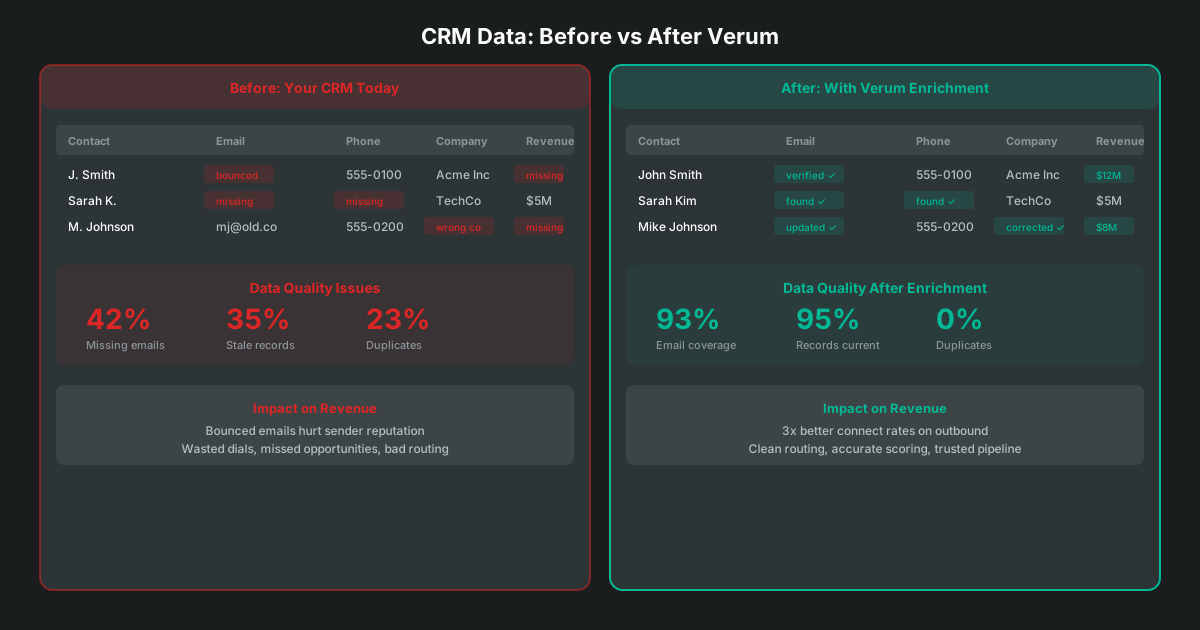
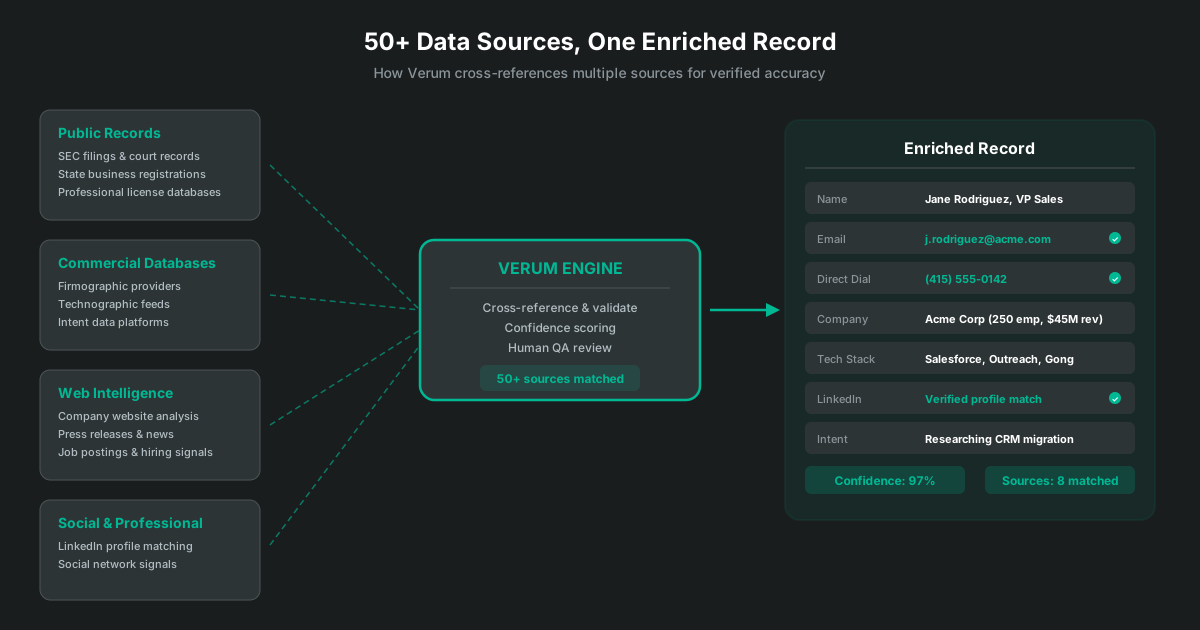
We normalize job titles, classify seniority levels, identify departments, and flag decision-makers across your database. The result is structured role data your scoring, routing, and targeting can actually rely on.
Title Normalization
We map thousands of title variations to a standardized taxonomy. 'VP of Sales,' 'Vice President, Revenue,' 'Head of Sales,' and 'Chief Revenue Officer' all get classified correctly so your routing rules and reports work.
For your team: Scoring models that use seniority and department data finally have clean inputs. Lead routing based on role actually sends leads to the right team.
Decision‑Maker Identification
We identify budget holders, technical evaluators, and executive sponsors within each account. Not every VP is a decision-maker, and not every Manager is junior. We use title, department, and company context to classify buying roles accurately.
Human QA on Everything
Title normalization is harder than it looks. 'Partner' means something different at a law firm versus a VC firm versus a consulting company. Our team handles the edge cases that automated classification gets wrong.
What Teams Do With Department Enrichment
- Lead routing accuracy. Route leads to the right team based on seniority and department, not free-text title fields. Department Enrichment makes your routing rules reliable.
- Lead scoring precision. Score leads by verified seniority level instead of keyword matching on messy title fields. C-level contacts score differently than managers.
- ABM committee mapping. Identify the full buying committee within target accounts: decision-makers, budget holders, influencers, and technical evaluators.
- Personalized outreach. Tailor messaging by seniority and role. An email to a VP of Sales reads differently than one to a Sales Operations Manager.
- Org chart building. Construct account org charts from enriched role data to plan multi-threaded engagement strategies.
The Process, Start to Finish
Step 1: Free Assessment (5 minutes)
Upload a sample file or tell us what you need. We'll review your data and tell you exactly what we can do, with expected match rates and timelines for department enrichment.
Step 2: Discovery Call (30 minutes)
We'll walk through your current stack, data sources, and goals. No sales pitch. Just a technical conversation about your data.
Step 3: Data Analysis (on us)
We run a free analysis on a sample of your records so you can see results before committing to anything.
Step 4: Full Engagement
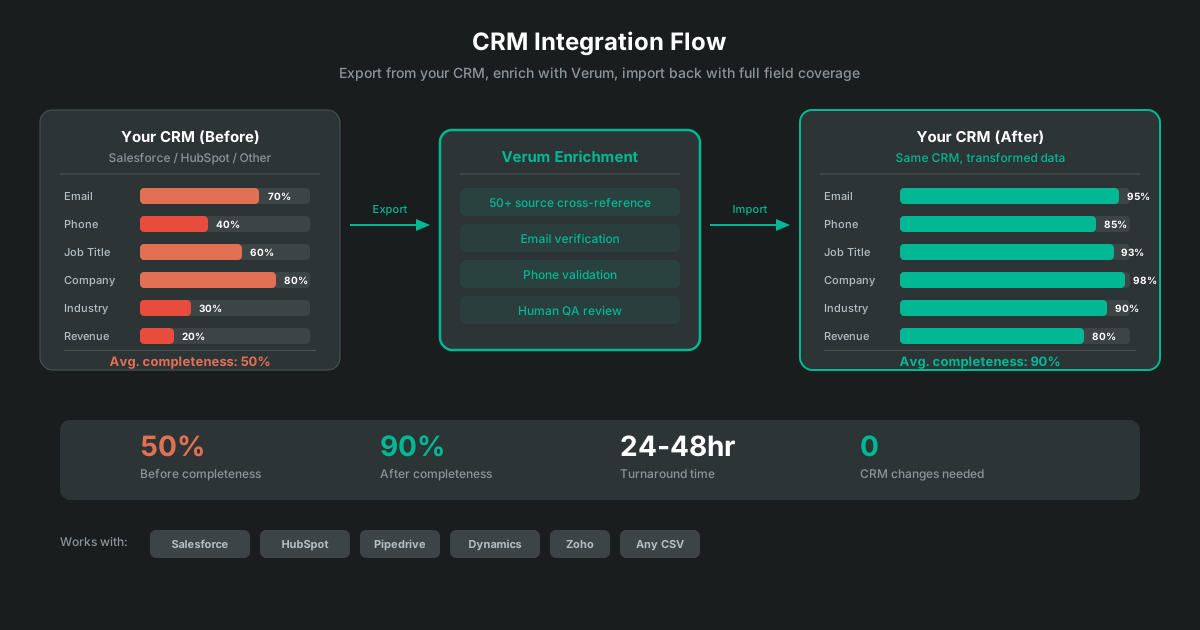
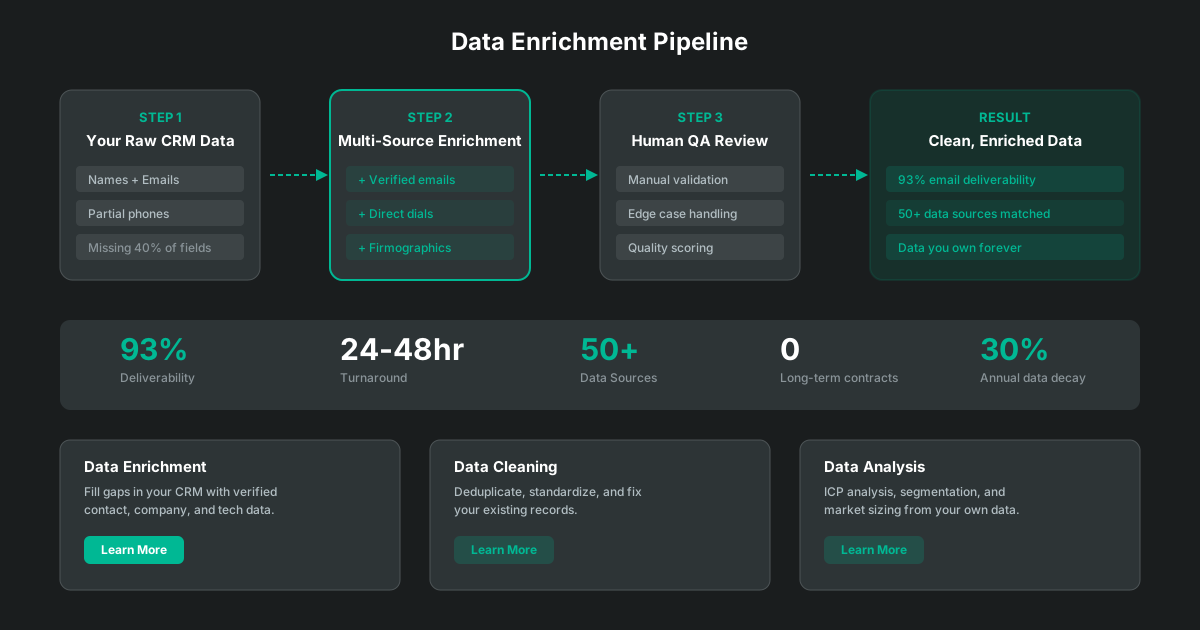
Once you approve the sample results, we process your full dataset. Most projects complete in 24‑48 hours.
Step 5: Ongoing (if you want it)
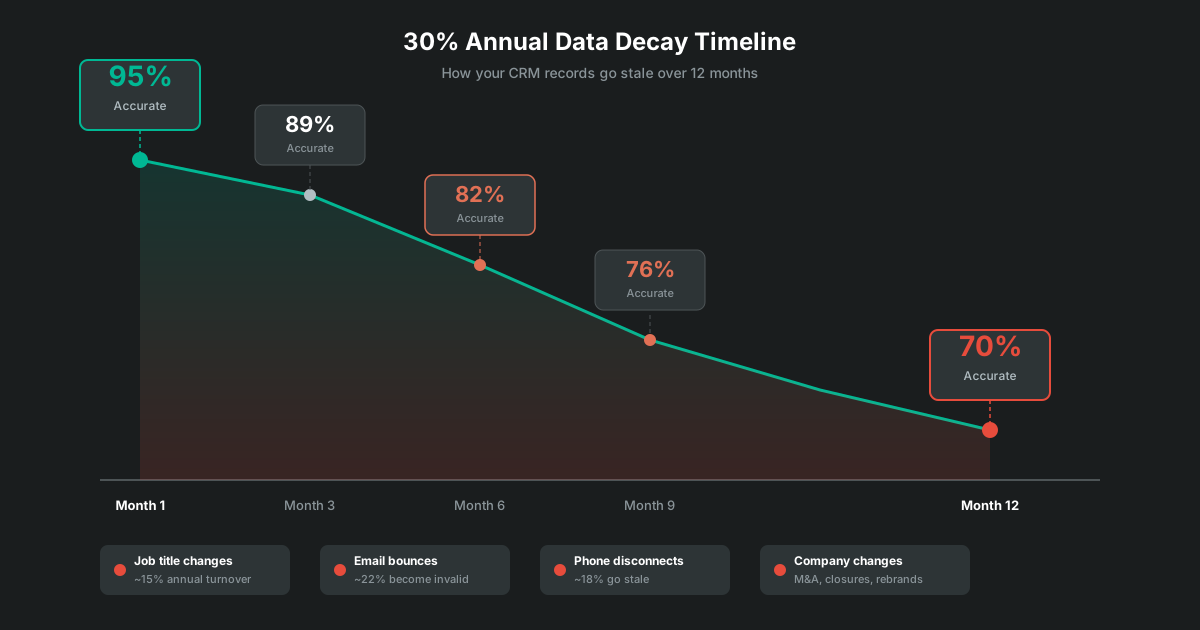
Data decays at 30% per year. We offer quarterly or monthly re‑enrichment to keep your records current. No long‑term contracts required.
Why Teams Choose Verum for Department Enrichment
- You don't touch a platform. There's no dashboard to learn. Email us a CSV, we email back clean data.
- Hours, not weeks. Our median turnaround is under 36 hours. Complex projects with 100K+ records take a few days.
- Human QA on every project. AI is fast but imperfect. Our team reviews every delivery before you see it.
- No long-term contracts. Per-project pricing. Use us once or set up a recurring schedule. No annual commitments.
- We understand department enrichment. We've enriched millions of records across every data type. Our team knows the edge cases and pitfalls specific to department enrichment.
The Old Way vs. With Verum
| The Old Way | With Verum |
|---|---|
| Free‑text title field with 10K variations | Normalized titles mapped to standard taxonomy |
| Routing guesses based on keywords | Routing rules on verified seniority and department |
| Scoring treats all 'Managers' equally | Scoring distinguishes Director from IC accurately |
| Manual org chart research per account | Buying committee mapped automatically |
| Outreach with wrong seniority assumptions | Messaging matched to actual decision level |
Common Questions About Department Enrichment
How long does department enrichment take?
Most projects complete in 24-48 hours. For databases over 100,000 records, turnaround may extend to 3-5 business days. We'll give you an exact timeline during the free assessment.
How do you handle non-standard titles?
We've built a title normalization taxonomy that maps thousands of variations to standardized categories. 'VP Sales,' 'VP of Sales,' 'Vice President - Sales,' and 'SVP Revenue' all resolve correctly. Edge cases get human review.
What's the typical match rate for department enrichment?
Match rates depend on the completeness of your input data and the specific enrichment type. For well-structured B2B records with company names and domains, expect 60-80% match rates. We run a free sample analysis to show you expected rates before you commit.
How is this different from buying a ZoomInfo license?
ZoomInfo sells access to a contact database. We clean the data you already have. They charge $15K-$50K+/year per seat. We charge per project with no annual contract. And when you cancel ZoomInfo, you lose the data. With us, the enriched records are yours to keep.
Try Us on 20 Records, Free
Not sure yet? Send us a sample file. We'll run a free analysis showing match rates, data gaps, and what enrichment can add. No commitment required.
Ready to go? Tell us what you need and we'll have enriched data back to you in 24-48 hours.
Related: All Enrichment | Enrichment Services | Contact Enrichment | Decision Maker Enrichment