The Data Quality Problem That Gets Worse Every Month
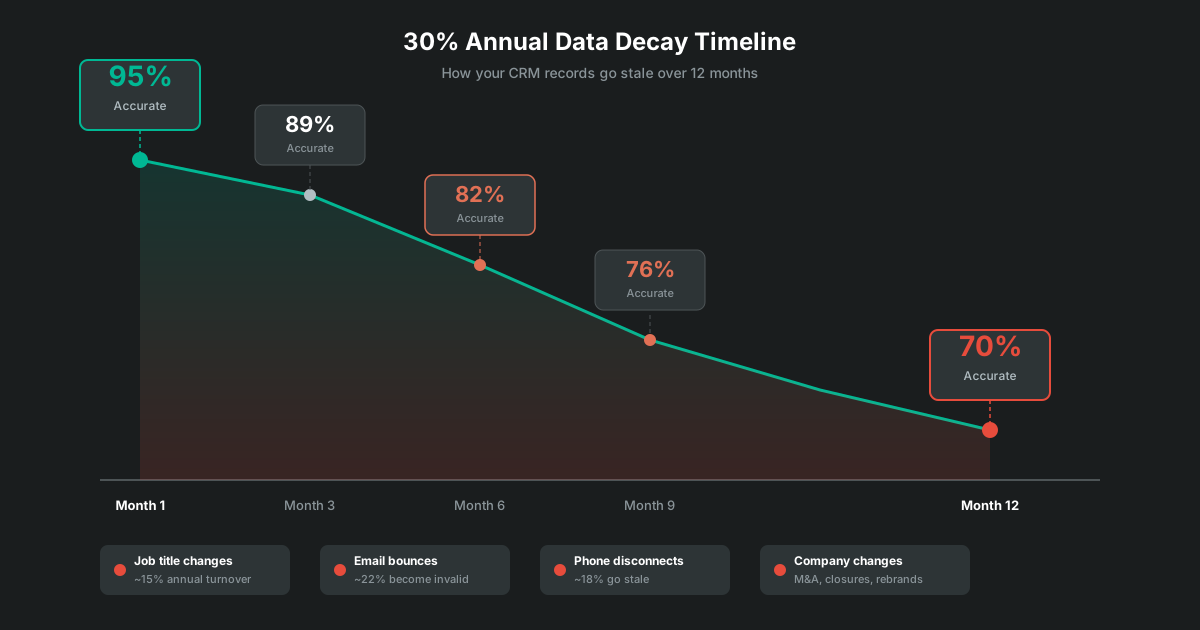
Data quality isn't a project. It's a condition. Your database is decaying at 30% per year whether you're watching or not. People change jobs. Companies get acquired. Email addresses expire. Phone numbers get reassigned. Without ongoing quality management, today's clean database is next quarter's mess.
One‑Time Cleanups Don't Last
You cleaned your database six months ago. Great. Since then, 15% of those records have already decayed. New records entered with missing fields, wrong formats, and duplicate matches. The cleanup bought you a few months of clean data, but the decay never stopped.
Quality Problems Compound
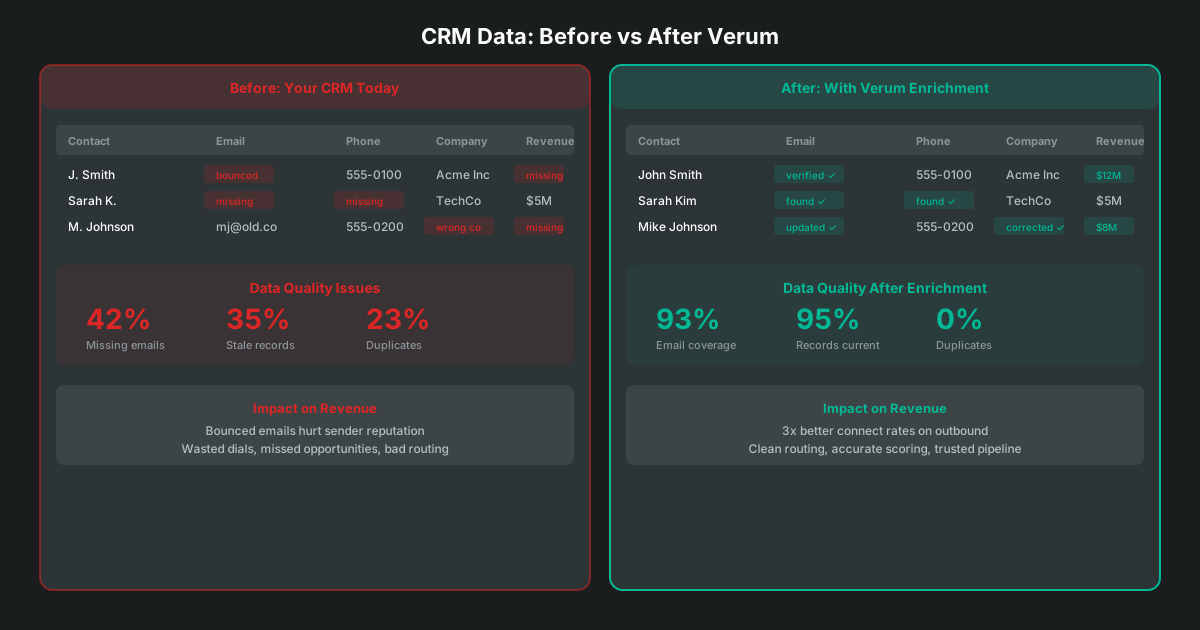
A missing email becomes a bounced campaign. A wrong title becomes a misrouted lead. A duplicate becomes a confused prospect. Each individual data error is small. But across 50,000 records, they compound into millions of dollars in lost efficiency and missed revenue.
You Can't Improve What You Don't Measure
Most teams can't answer basic questions about their data quality. What percentage of records have valid emails? How many duplicates exist? When was the last time firmographic data was refreshed? Without a quality baseline, you can't set targets or track improvement.
Reactive Fixes Cost More Than Proactive Maintenance
Fixing a data problem after it causes a bad customer experience costs 10x more than preventing it. A bounced email to a key prospect is embarrassing. A misrouted enterprise lead that sits for three days is revenue lost. Ongoing quality management prevents these incidents.
How Verum Handles Data Validation
We set up ongoing data quality monitoring and periodic cleanup so your database stays clean after the initial project. Monthly or quarterly refresh cycles catch decay before it compounds into bigger problems.
Quality Scorecards
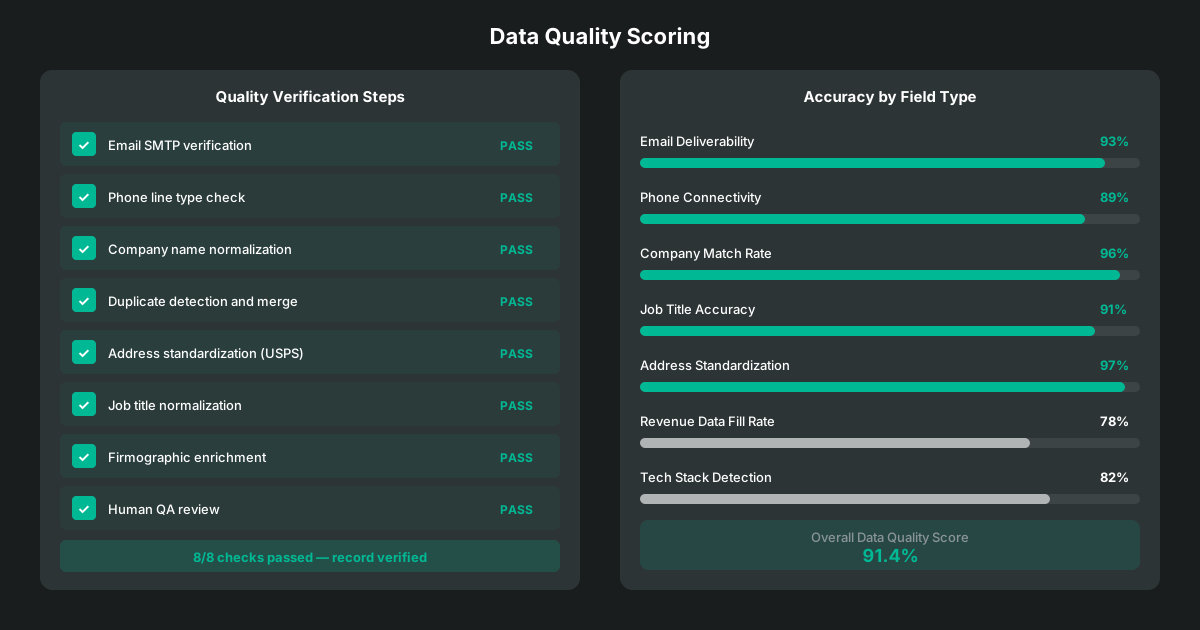
We establish baseline quality metrics (completeness, accuracy, consistency, validity) and track them over time. Your team gets a monthly scorecard showing where quality improved and where decay is happening.
For your team: Quality scorecards turn data quality from an invisible problem into a measurable metric that leadership can track and resource appropriately.
Automated Decay Detection
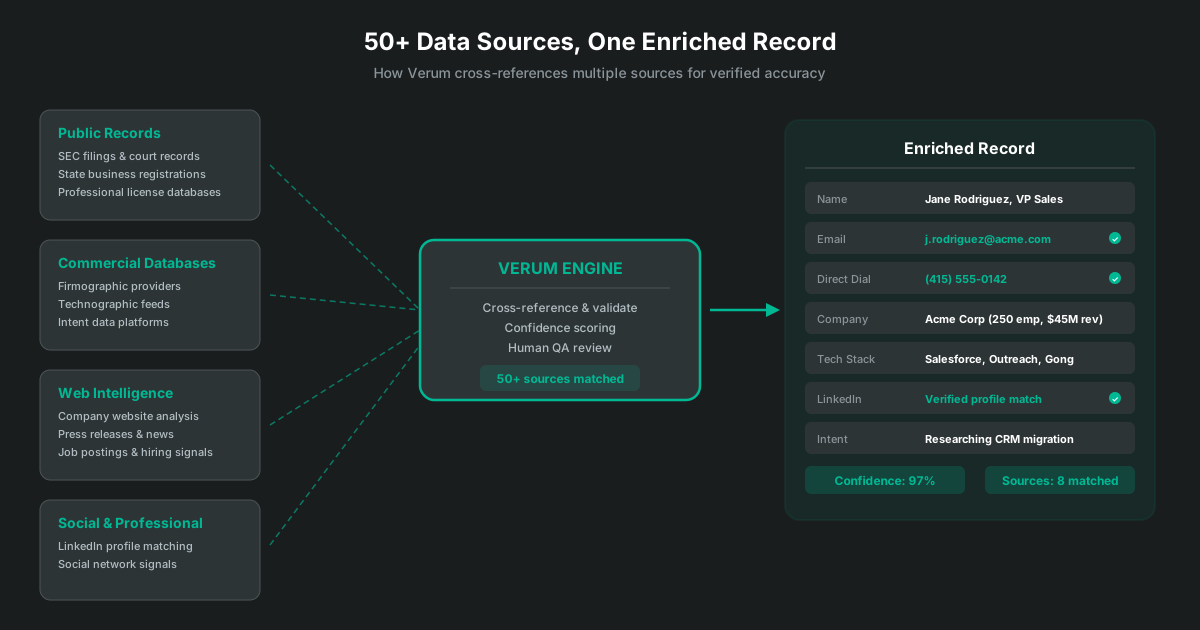
We monitor for signals that records have decayed: email bounces, phone disconnects, title changes, company acquisitions. Records flagged for decay get re-enriched or removed before they cause downstream problems.
Human QA on Everything
Automated monitoring catches the obvious decay. But some data problems (a company rebranding, a merger completing, an address changing due to office consolidation) need human judgment. Our team handles the cases algorithms can't.
What Teams Do With Data Validation
- Ongoing data health. Maintain data quality as a continuous process, not a one-time project. Regular monitoring catches problems early.
- Executive reporting. Provide leadership with data quality metrics they can track and act on, not just complaints about bad data.
- Revenue operations. Give RevOps teams confidence that the data powering their models, forecasts, and automations is accurate.
- Customer experience. Prevent bad data from reaching customer-facing interactions. Clean data means fewer embarrassing mistakes.
- Cost reduction. Reduce the hidden costs of bad data: wasted campaigns, lost productivity, missed leads, and incorrect forecasting.
Five Steps to Clean Data
Step 1: Free Assessment (5 minutes)
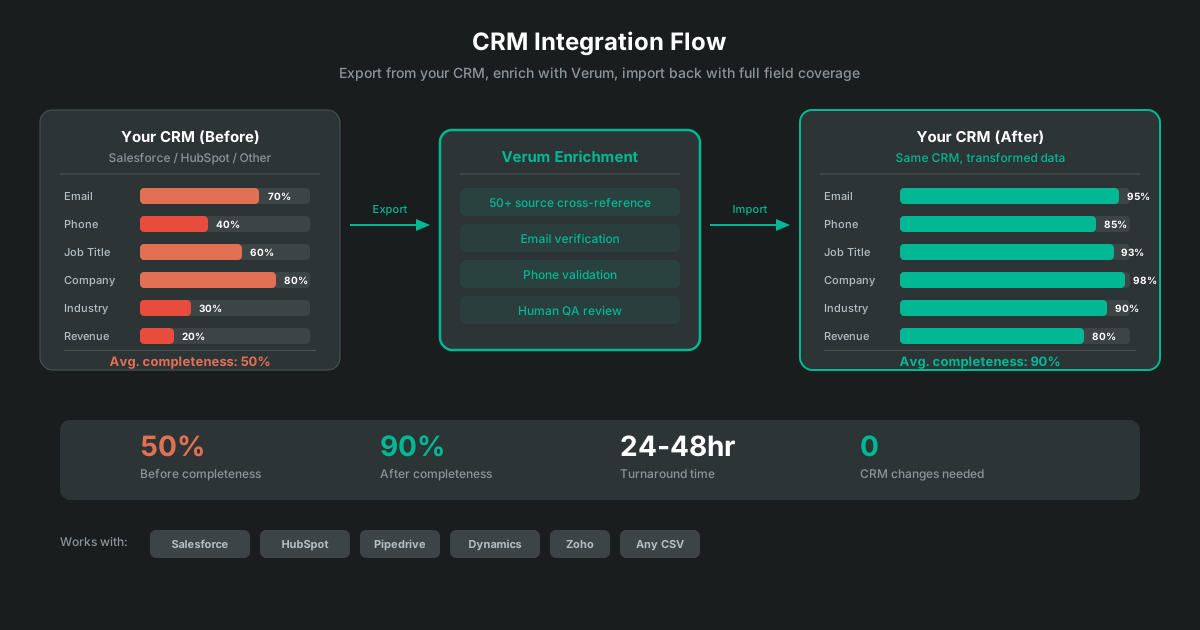
Upload a sample file or tell us what you need. We'll review your data and tell you exactly what we can do, with expected match rates and timelines for data validation.
Step 2: Discovery Call (30 minutes)
We'll walk through your current stack, data sources, and goals. No sales pitch. Just a technical conversation about your data.
Step 3: Data Analysis (on us)
We run a free analysis on a sample of your records so you can see results before committing to anything.
Step 4: Full Engagement
Once you approve the sample results, we process your full dataset. Most projects complete in 24‑48 hours.
Step 5: Ongoing (if you want it)
Data decays at 30% per year. We offer quarterly or monthly re‑enrichment to keep your records current. No long‑term contracts required.
Why Teams Choose Verum for Data Validation
- Fully managed. Your team doesn't change their workflow. We plug in and handle the data side.
- Quick enough to be useful. Most teams get results before their next pipeline review meeting.
- Human verification. Every project gets human QA. We don't just run your data through an API and hand it back.
- Pay as you go. One project, one invoice. Come back when you need us again. No lock-in.
- We know data validation. We've cleaned millions of records. Our team handles the edge cases that automated tools get wrong.
The Old Way vs. With Verum
| The Old Way | With Verum |
|---|---|
| One‑time cleanup, back to messy in 6 months | Ongoing monitoring catches decay as it happens |
| No visibility into data quality trends | Monthly scorecards track every quality dimension |
| Reactive: fix problems after they cause damage | Proactive: prevent problems before they reach your team |
| Quality is ops team's problem alone | Quality metrics visible to leadership with clear ROI |
| Data hygiene is a project | Data hygiene is an ongoing program |
Common Questions About Data Validation
How long does data validation take?
Most projects complete in 24-48 hours for databases under 100,000 records. Larger databases may take 3-5 business days. We'll give you an exact timeline after reviewing your data.
How often should we run quality maintenance?
Quarterly is the minimum for most teams. Monthly is better if you have high-volume lead inflows or your industry has rapid personnel changes. We'll recommend a cadence based on your decay rate and data volume.
What metrics do you track?
Completeness (% of fields populated), accuracy (% of records verified current), consistency (% conforming to format standards), validity (% of emails/phones deliverable), and duplication (% of database that's duplicated). We establish baselines and track trends.
How is this different from buying a ZoomInfo license?
ZoomInfo sells access to a contact database. We clean the data you already have. They charge $15K-$50K+/year per seat. We charge per project with no annual contract. And when you cancel ZoomInfo, you lose the data. With us, the enriched records are yours to keep.
Try Us on 20 Records, Free
Not sure yet? Send us a sample. We'll run a free quality assessment showing duplicates, invalid emails, and format issues. No commitment.
Ready to go? We'll have clean data back to you in 24-48 hours.
Related: All Cleaning | Data Cleaning Services | CRM Cleaning | Data Validation