The Data Standardization Mess
Your CRM has 'NYC,' 'New York,' 'New York City,' and 'new york' in the same field. Phone numbers appear as (555) 123-4567, 555-123-4567, 5551234567, and +1 555 123 4567. Job titles have thousands of variations for the same role. This inconsistency breaks everything downstream.
Reporting Requires Manual Cleanup First
Before you can run a report on 'all contacts in New York,' someone has to identify every variation of New York in your data. This turns a 5-minute report into a 2-hour data project. And next quarter, new variations will have crept in.
Automation Rules Fail on Inconsistent Data
Your routing rule says 'if state equals California, assign to West Coast team.' But the field contains 'CA,' 'California,' 'Calif,' and 'Cali.' A quarter of your California leads go to the wrong team because the automation can only match what it's told to look for.
Integrations Break Silently
When data flows between your CRM, marketing automation, and BI tools, format inconsistencies cause silent failures. Records that don't match merge rules get skipped. Fields that exceed character limits get truncated. You don't find out until someone notices a gap in a report weeks later.
Manual Cleanup Is a Recurring Tax
Every quarter, someone on your team spends days cleaning up data formats. It's tedious, error-prone, and gets undone the moment new records enter the system. Without systematic standardization, you're paying the cleanup tax forever.
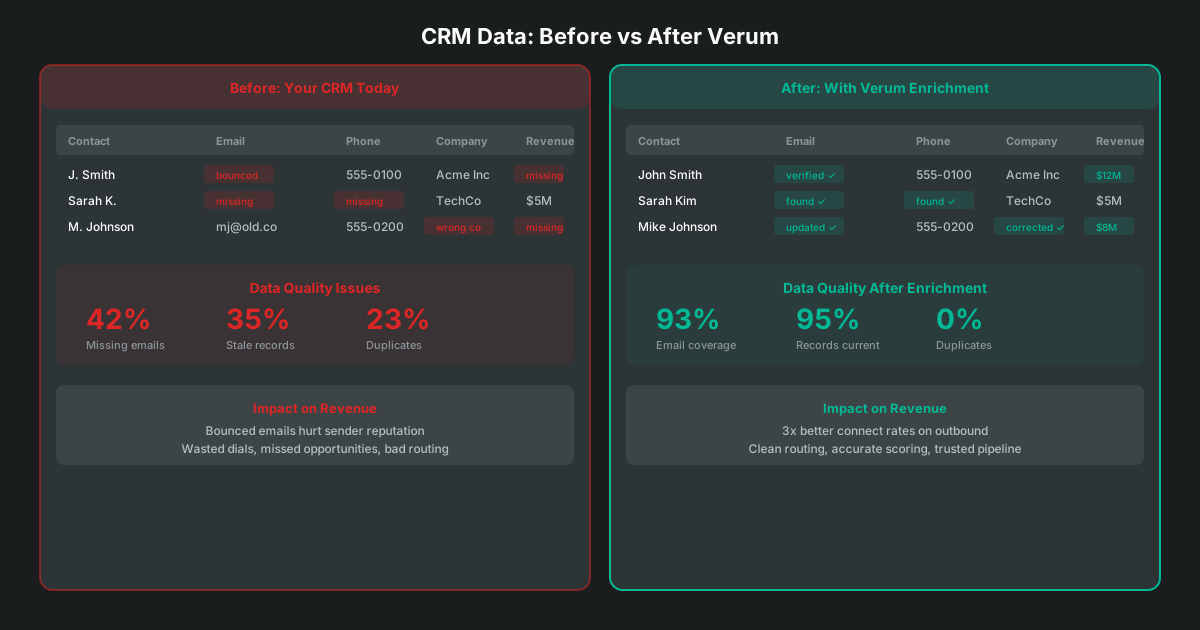
How Verum Handles Address Normalization
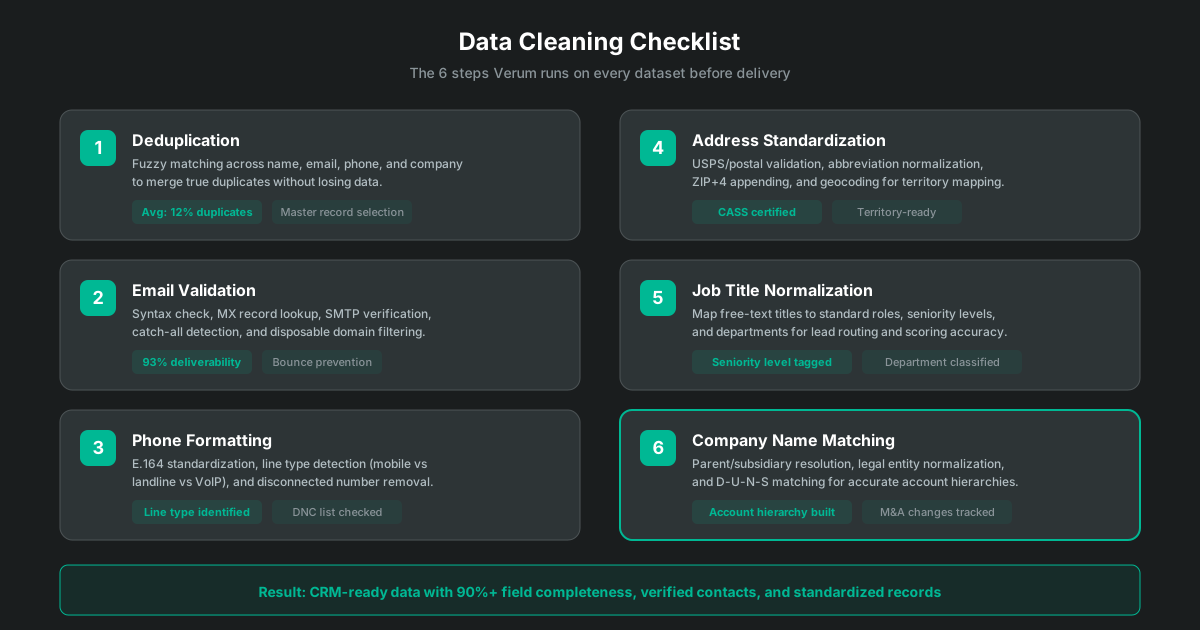
We standardize every field in your database to consistent formats. Phone numbers get normalized. Addresses get USPS-standardized. Titles get mapped to a taxonomy. States, countries, and industries get unified. The result is a database where automation, reporting, and integrations work.
Field‑by‑Field Standardization
We don't just run a global find-and-replace. Each field type has specific normalization rules. Phone numbers follow E.164 format. Addresses follow USPS standards. Titles map to a role taxonomy. Every field gets the treatment it needs.
For your team: After standardization, your routing rules, reporting queries, and integration mappings work correctly without the manual workarounds you've been maintaining.
Custom Rules for Your Data
Every database has unique conventions. If your team uses specific title categories, industry labels, or regional conventions, we build custom standardization rules that match your internal standards.
Human QA on Everything
Automated standardization handles 90% of cases. The remaining 10% (ambiguous abbreviations, international formats, compound names) get human review to ensure accuracy.
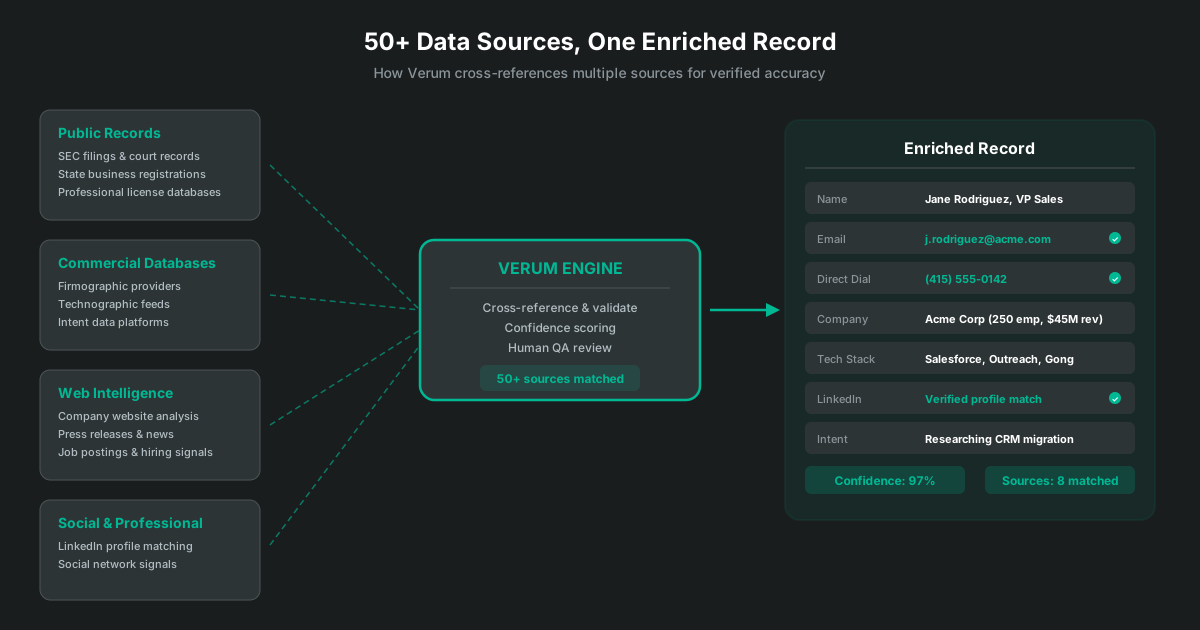
What Teams Do With Address Normalization
- Reporting accuracy. Run reports on clean, consistent data without spending hours normalizing fields first.
- Automation reliability. Make your routing rules, workflows, and integrations work correctly by feeding them standardized data.
- Integration compatibility. Ensure data flows cleanly between CRM, marketing automation, BI tools, and other platforms.
- Lead routing precision. Route leads correctly by standardizing the fields your routing rules depend on.
- Data migration prep. Standardize data before migrating to a new system so you don't import formatting problems.
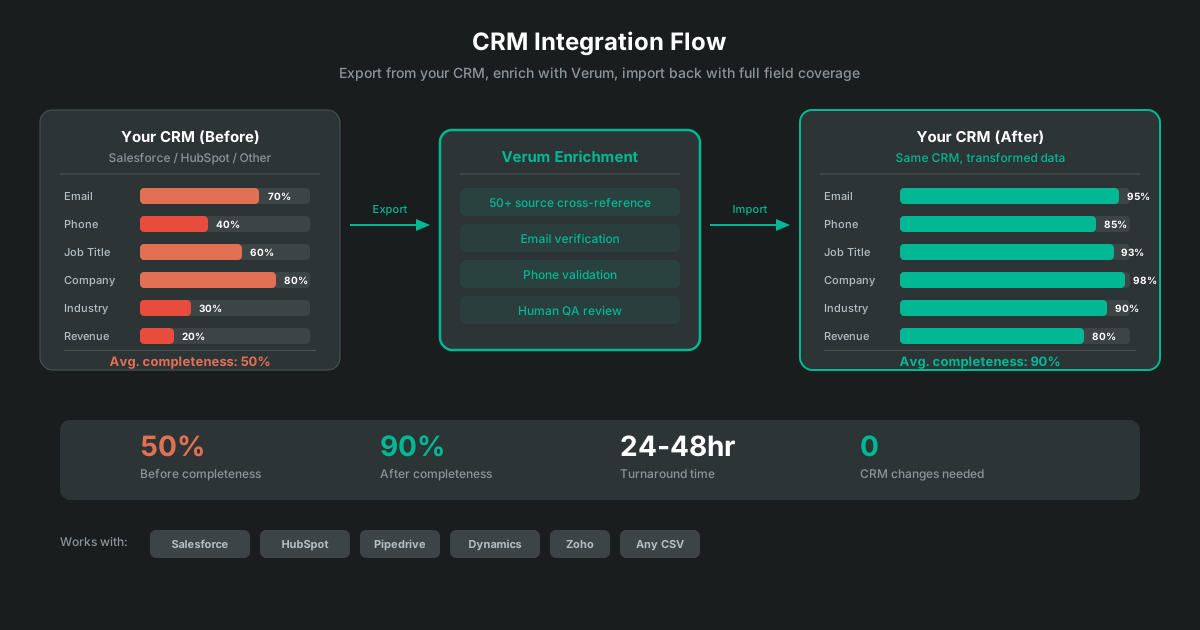
Getting Started Takes Less Time Than Your Average Meeting
Step 1: Free Assessment (5 minutes)
Upload a sample file or tell us what you need. We'll review your data and tell you exactly what we can do, with expected match rates and timelines for address normalization.
Step 2: Discovery Call (30 minutes)
We'll walk through your current stack, data sources, and goals. No sales pitch. Just a technical conversation about your data.
Step 3: Data Analysis (on us)
We run a free analysis on a sample of your records so you can see results before committing to anything.
Step 4: Full Engagement
Once you approve the sample results, we process your full dataset. Most projects complete in 24‑48 hours.
Step 5: Ongoing (if you want it)
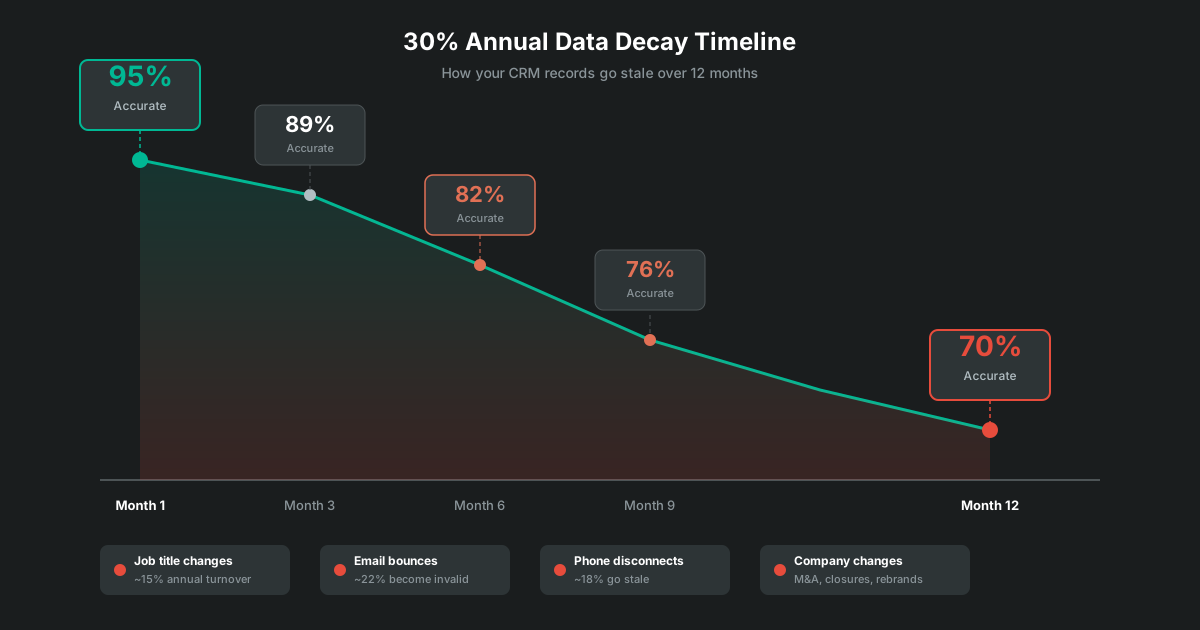
Data decays at 30% per year. We offer quarterly or monthly re‑enrichment to keep your records current. No long‑term contracts required.
Why Teams Choose Verum for Address Normalization
- We do the work. You don't log into a platform. Send us your data, we send back enriched records.
- Back to you in a day or two. We processed 50,000 records for a client last month in under 48 hours.
- Not just an API wrapper. We cross-reference 50+ sources and review the output. Automated tools miss things. We catch them.
- Month-to-month or one-off. We earn your business each time. No six-figure annual deal required.
- We know address normalization. We've cleaned millions of records. Our team handles the edge cases that automated tools get wrong.
The Old Way vs. With Verum
| The Old Way | With Verum |
|---|---|
| 47 variations of the same state name | One standardized format across all records |
| Phone numbers in 8 different formats | E.164 standard format on every number |
| Hours of manual cleanup before reporting | Reports run instantly on clean, consistent data |
| Integration errors from format mismatches | Clean data flows between systems without errors |
| New records break existing standards | Validation rules catch format issues at entry |
Common Questions About Address Normalization
How long does address normalization take?
Most projects complete in 24-48 hours for databases under 100,000 records. Larger databases may take 3-5 business days. We'll give you an exact timeline after reviewing your data.
Can you standardize to our custom format?
Yes. If your team has specific conventions for titles, industries, regions, or other fields, we'll build custom standardization rules that match your internal standards.
Will standardization change the actual data?
Standardization changes the format, not the meaning. 'NYC' becomes 'New York' and '(555) 123-4567' becomes '+15551234567,' but the underlying data stays the same. We preserve original values in a separate column if you want them.
How is this different from buying a ZoomInfo license?
ZoomInfo sells access to a contact database. We clean the data you already have. They charge $15K-$50K+/year per seat. We charge per project with no annual contract. And when you cancel ZoomInfo, you lose the data. With us, the enriched records are yours to keep.
Try Us on 20 Records, Free
Not sure yet? Send us a sample. We'll run a free quality assessment showing duplicates, invalid emails, and format issues. No commitment.
Ready to go? We'll have clean data back to you in 24-48 hours.
Related: All Cleaning | Data Cleaning Services | Data Deduplication | Database Cleanup