Data Cleaning and Data Analysis: Why the Order Matters
Data cleaning is the first step of any reliable data analysis. The phrase "garbage in, garbage out" is repeated until it is invisible, but the data-analysis profession has a more honest number for it: data scientists spend 60-80% of their time on data preparation before any model gets fit. That ratio is not a bug. It is the work. A cleaned, complete, deduplicated dataset is the actual input to analysis, regardless of whether the analysis is a basic segment count or a complex predictive model.
Most teams skip the cleaning step or shortcut it because the value of clean data is invisible until the analysis lands. Then the analysis lands, the executive sponsor asks "is the employee-count distribution real or is half of it from a hard-coded default value?" and the answer is uncomfortable. Data cleaning before analysis is what makes that question one you can answer.
What Data Cleaning Before Analysis Covers
- Deduplication. Records that appear multiple times under different spellings inflate counts and skew percentages.
- Standardization. Industry codes ("SaaS," "Software", "Software-as-a-Service") get reconciled to one value so segment counts work.
- Validation. Email addresses, phone numbers, and URLs get checked so the analysis is not inflated by junk records.
- Enrichment. Missing employee count, revenue, industry, and technology fields get filled so segments are based on real attributes instead of "Unknown."
- Outlier review. Suspicious values (employee count of 1,000,000 because someone typed too many zeros) get flagged for human review.
How Bad Data Breaks Common Analyses
The same data quality problems show up in different analyses with different symptoms. A few examples:
| Analysis | What Dirty Data Does To It |
|---|---|
| ICP analysis | Segments built on stale firmographic data describe yesterday's customers; duplicates inflate segment counts. |
| Win/loss analysis | Missing stage history and inconsistent "loss reason" picklist values produce conclusions nobody can act on. |
| Lead scoring model | Blank firmographic fields force the model to score on guesses; the score loses predictive power. |
| Cohort analysis | Inconsistent customer-creation dates and lifecycle stage definitions produce cohorts that overlap or miss customers entirely. |
| Attribution analysis | Missing lead source on 40% of records biases the analysis toward whichever source captured itself best. |
| Forecast modeling | Inconsistent stage definitions across reps create forecast bands that look precise but encode rep behavior, not deal reality. |
The fix in every case is the same: clean and standardize the inputs before running the analysis. Tools cannot rescue an analysis built on bad data; they can only obscure the problem behind a confident-looking chart.
The Practical Order: Five Steps
- Define the analysis question. What decision will this analysis inform? The question shapes which fields matter and how clean they need to be.
- Audit data quality. Run a profile of the dataset. Duplicate rate, fill rate per field, outlier counts, format inconsistency. Know what you are working with before you spend time cleaning.
- Clean and standardize. Deduplicate. Standardize picklists. Validate emails and phones. Enrich the high-priority blank fields. Document every change.
- Run the analysis. Now the work the team showed up to do happens on a foundation that can support conclusions.
- Report with caveats. Document the data limitations the analysis still carries. Honest caveats are what makes the analysis trustworthy to a skeptical executive.
For ICP analysis specifically, that order matters even more, because ICP work is the input to most other downstream analyses. Wrong ICP segments cascade into wrong scoring models, wrong territory plans, and wrong product investment decisions. Cleaning first is cheap insurance against that compounding error.
Why Most ICP Analysis Produces Wrong Answers
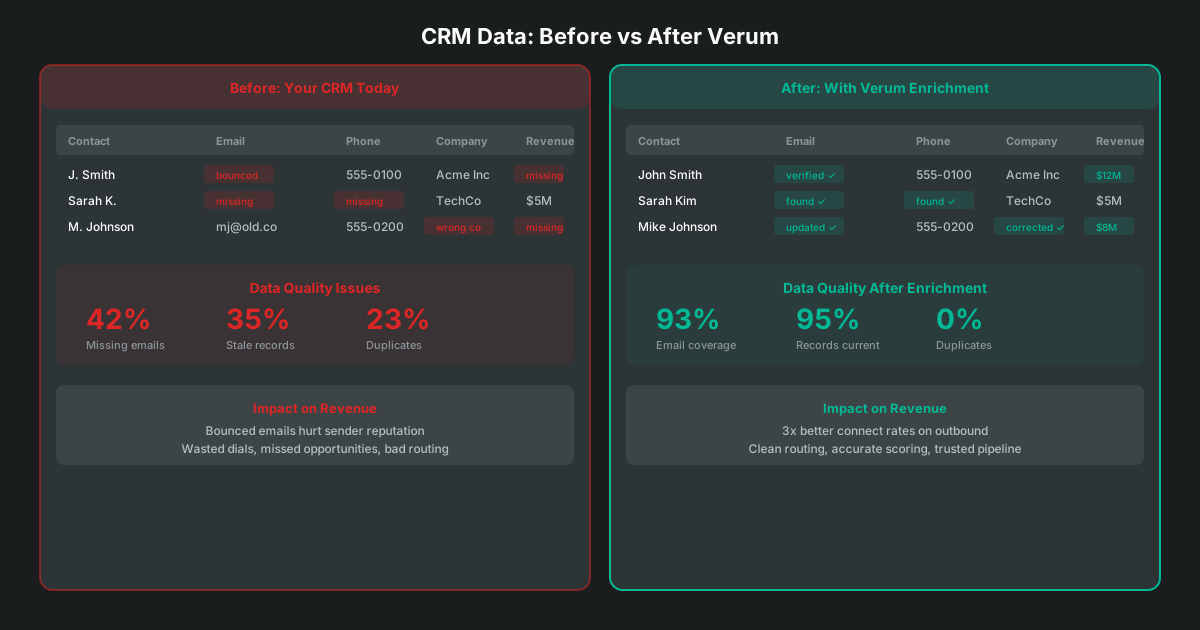
Most icp analysis fails before it starts. The methodology is usually fine. The data underneath is the problem. 91% of CRM data is incomplete. 62% of organizations rely on data that's up to 40% inaccurate. Every model and conclusion built on that foundation is compromised.
Dirty Data Produces Wrong Answers
Your icp analysis says mid-market SaaS is your best segment. But the employee counts driving that conclusion are wrong on 30% of accounts. The industry classifications are inconsistent. 25% of your customer records are duplicates inflating the pattern. Is the conclusion right? Maybe. Can you bet your strategy on it? Not confidently.
Analysts Spend 80% of Time Cleaning
Data scientists report spending 80% of their time on data preparation and cleaning. That means your expensive analysis project is mostly janitorial work. The actual analysis, the part that generates insight, gets compressed into the remaining 20% of effort.
Incomplete Records Create Blind Spots
If 40% of your customer records are missing firmographic data, your icp analysis has a 40% blind spot. Patterns that appear significant may just reflect which records happened to have complete data. Real patterns get masked by data gaps.
Stale Data Reflects Yesterday's Market
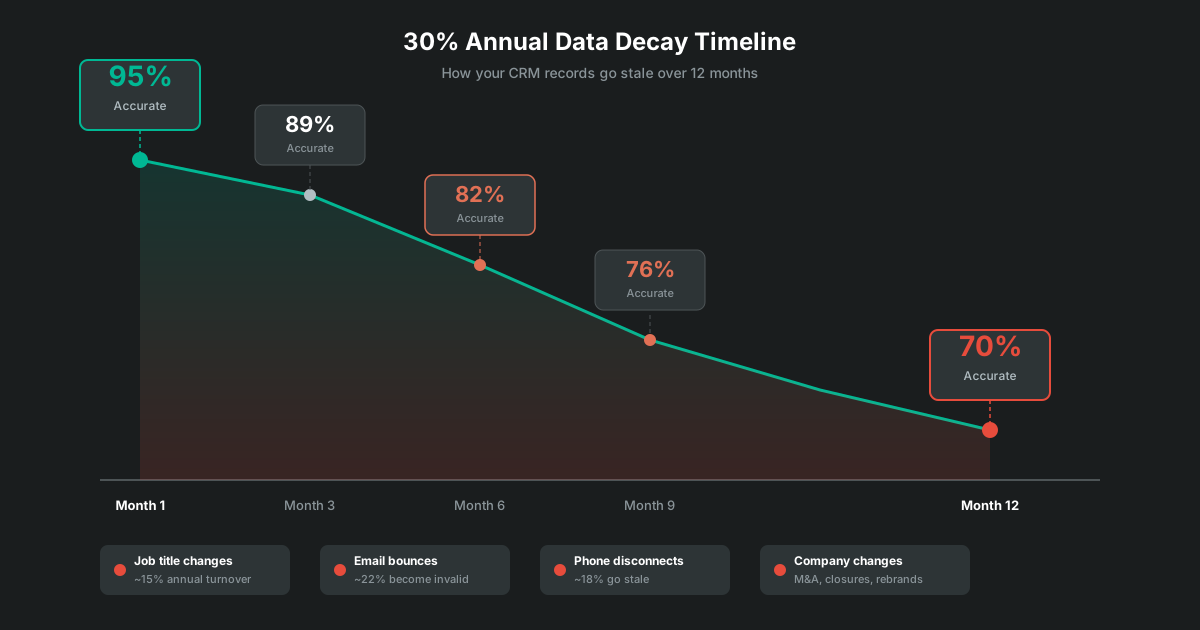
Analysis based on data that's 12-18 months old reflects a market that no longer exists. Companies have grown, been acquired, pivoted, or closed. Your analysis needs current data to produce current insights.
How Verum Delivers Reliable ICP Analysis
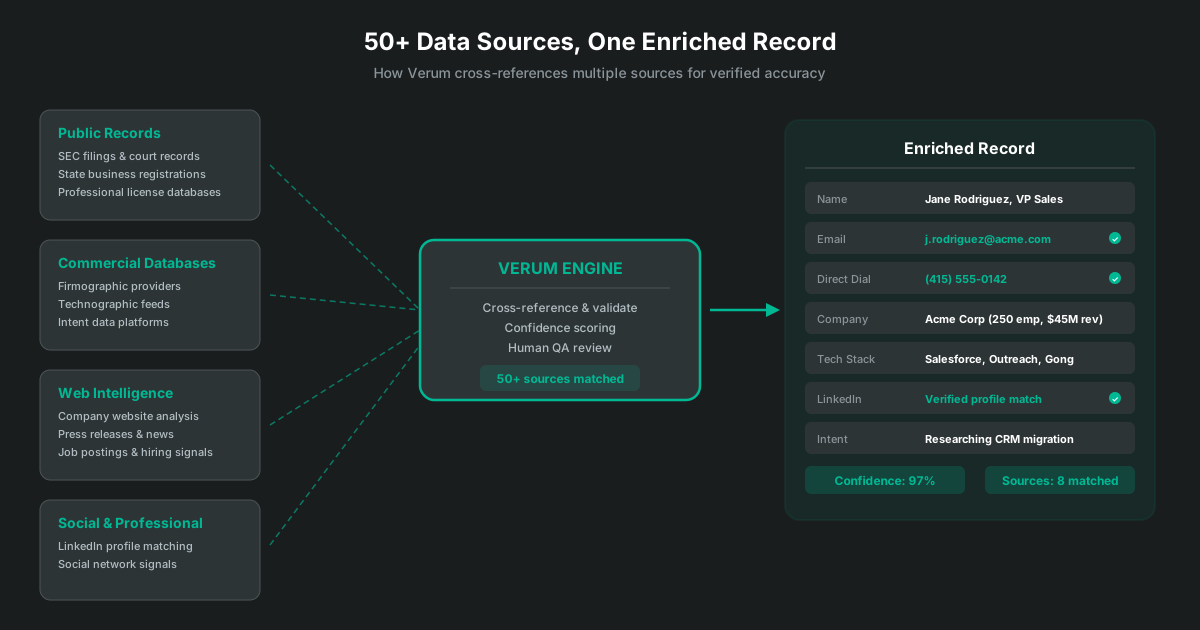
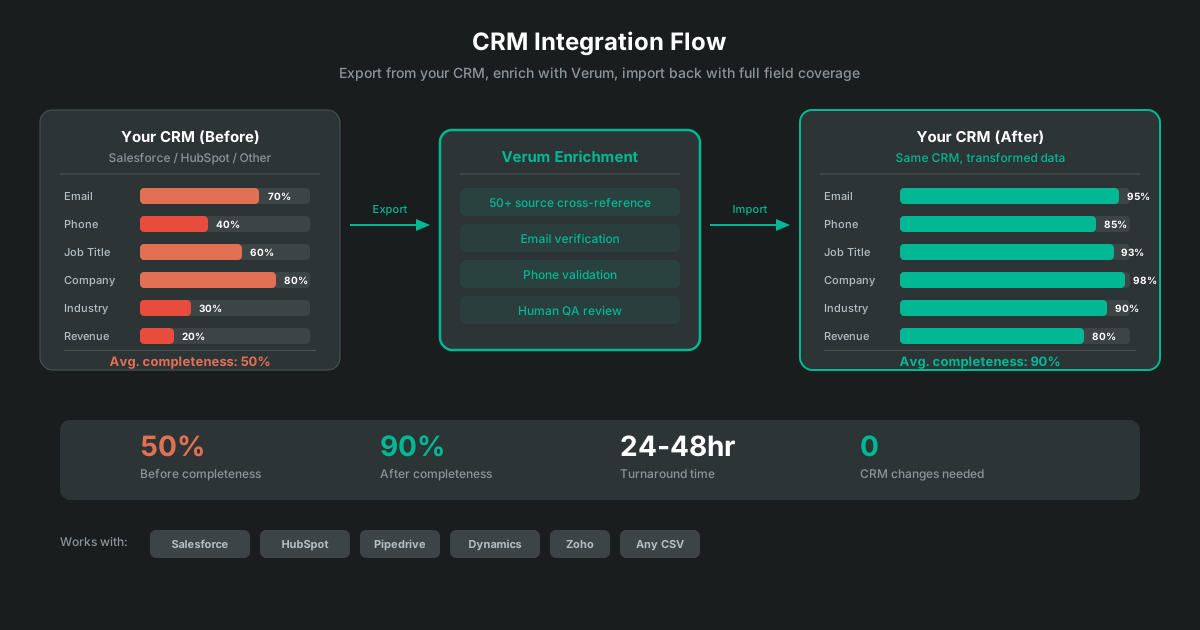
We clean and enrich your data first, then perform the analysis. This means your icp analysis runs on complete, accurate, current data, not the 91% incomplete CRM export you started with.
Data Preparation Included
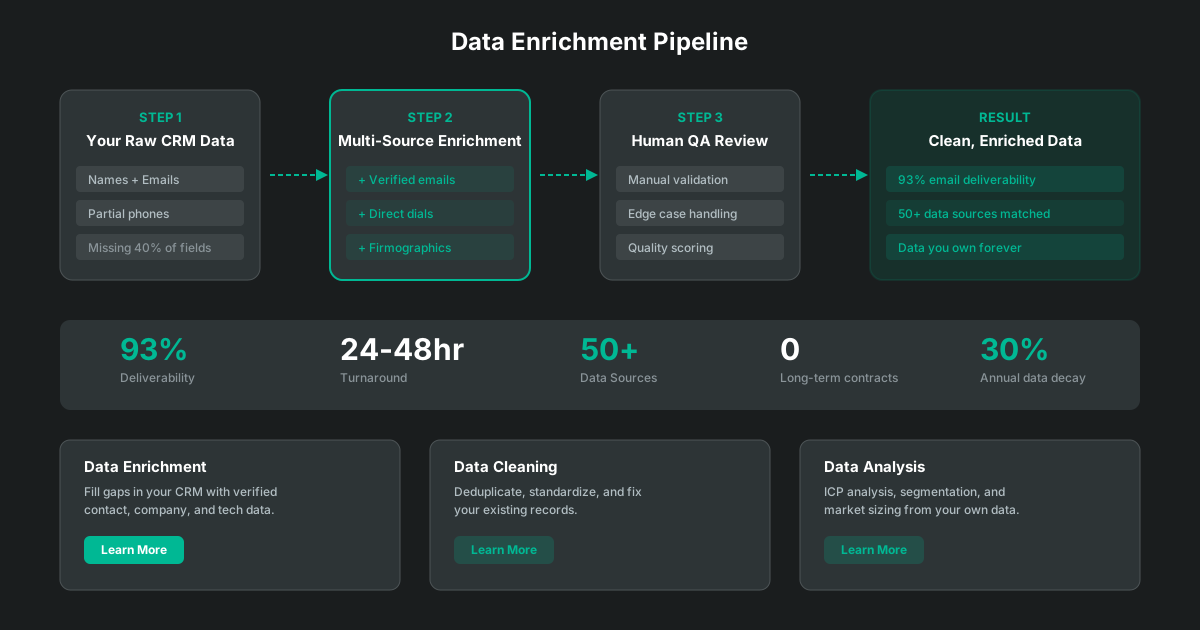
We deduplicate records, validate emails, standardize industry codes, enrich missing firmographics, and normalize titles before any analysis begins. The data cleaning is included, not an extra charge.
For your team: You get analysis results you can trust because the foundation was verified first. No asterisks about data quality caveats.
Actionable Recommendations
Our icp analysis doesn't end with a data dump. You get specific, actionable recommendations for targeting, messaging, resource allocation, and strategy that your team can execute immediately.
Human QA on Everything
Both the data cleaning and the analysis get human review. Our team validates data quality before analysis begins and reviews analytical conclusions for accuracy before delivery.
What You Get From ICP Analysis
- Data-driven strategy. Replace assumptions with evidence. ICP Analysis on clean data gives you confidence that your strategy targets the right market.
- Board-ready deliverables. Analysis that leadership trusts because the underlying data has been verified and cleaned.
- Go-to-market focus. Know exactly which segments, verticals, and company profiles to prioritize based on actual performance data.
- Resource allocation. Allocate sales, marketing, and product resources to the segments with the highest demonstrated ROI.
- Competitive positioning. Understand where you win, where you lose, and why, based on data patterns rather than anecdotes.
Five Steps to Clean Data
Step 1: Free Assessment (5 minutes)
Upload a sample file or tell us what you need. We'll review your data and tell you exactly what we can do, with expected match rates and timelines for icp analysis.
Step 2: Discovery Call (30 minutes)
We'll walk through your current stack, data sources, and goals. No sales pitch. Just a technical conversation about your data.
Step 3: Data Analysis (on us)
We run a free analysis on a sample of your records so you can see results before committing to anything.
Step 4: Full Engagement
Once you approve the sample results, we process your full dataset. Most projects complete in 24‑48 hours.
Step 5: Ongoing (if you want it)
Data decays at 30% per year. We offer quarterly or monthly re‑enrichment to keep your records current. No long‑term contracts required.
Why Teams Choose Verum for ICP Analysis
- We clean the data first. Most analysts skip this. We don't. Your analysis runs on verified, enriched data.
- Actionable output. Not just charts and tables. Specific recommendations your team can execute.
- Fast delivery. Data cleaning in 24-48 hours. Analysis complete within 1-2 weeks.
- No long-term contracts. Per-project pricing. Get the analysis you need without annual commitments.
- Domain expertise. We've done hundreds of icp analysis projects across industries. We know what works and what doesn't.
The Old Way vs. With Verum
| The Old Way | With Verum |
|---|---|
| Analysis on dirty CRM data | Analysis on cleaned, enriched data |
| 80% of analyst time spent cleaning | Data arrives pre‑cleaned, analyst focuses on insights |
| Conclusions nobody trusts | Results backed by verified, complete data |
| Static report, outdated in months | Refreshable analysis with updated data |
| DIY with spreadsheets | Professional analysis with clear methodology |
Common Questions About ICP Analysis
What data do I need to provide for icp analysis?
Typically your CRM export (contacts and accounts), closed-won and closed-lost deal data, and any product usage data you have. We'll tell you exactly what we need during the discovery call. More data means better analysis, but we can work with what you have.
How is this different from hiring an analyst?
We combine data cleaning with analysis. Most analysts spend 80% of their time cleaning data before they can analyze it. We handle the cleaning and enrichment automatically, then focus our analysis time on insights and recommendations.
How long does the analysis take?
Data cleaning takes 24-48 hours. Analysis depends on scope, but most icp analysis projects complete within 1-2 weeks including data preparation, analysis, and delivery of recommendations.
How is this different from buying a ZoomInfo license?
ZoomInfo sells access to a contact database. We clean the data you already have. They charge $15K-$50K+/year per seat. We charge per project with no annual contract. And when you cancel ZoomInfo, you lose the data. With us, the enriched records are yours to keep.
Ready to Fix Your Data?
Not sure yet? Send us a sample of your data. We'll run a free quality assessment so you can see what needs cleaning before analysis.
Ready to go? Tell us your icp analysis goals and we'll scope the project within 24 hours.
Related: All Analysis | ICP Development | Data Enrichment | Data Cleaning