What is CRM in Healthcare?
Customer relationship management (CRM) in healthcare is a software system that stores information about the people and organizations a healthcare business interacts with: patients, referring physicians, payers, vendors, and prospects. The CRM tracks every touchpoint (calls, emails, appointments, marketing campaigns) and gives staff one place to see the full history of a relationship. Healthcare CRMs are used by hospitals, health systems, medical device companies, healthtech vendors, private practices, and pharmacy chains.
Healthcare CRM is not the same as an EHR (electronic health record). An EHR holds clinical data: diagnoses, medications, lab results, treatment plans. It is governed by HIPAA and locked down for clinical use. A CRM holds relationship data: who knows whom, when they last spoke, what they care about, what was promised. The two systems sometimes integrate, but they serve different jobs. Epic and Cerner are EHRs. Salesforce Health Cloud, HubSpot, and Microsoft Dynamics 365 are CRMs that have been configured for healthcare.
The simplest way to picture it: the EHR is the medical chart. The CRM is the address book and the conversation history. Both matter; neither replaces the other.
What Healthcare Teams Use a CRM For
- Patient acquisition and outreach. Health systems run marketing campaigns for service lines (cardiology, women's health, orthopedics). The CRM tracks who responded, who became a patient, and what the cost of acquisition was.
- Referral management. Specialty practices depend on referrals from primary care. The CRM tracks which referring physicians send the most patients, what their preferences are, and when they were last visited.
- Payer relationships. Health systems negotiate contracts with payers. The CRM logs every conversation, contract version, and term that gets renegotiated.
- Medical device and life sciences sales. Reps call on hospitals, surgery centers, and physician practices. The CRM tracks accounts, decision-makers, product preferences, and quota.
- Healthtech B2B sales. SaaS vendors selling into hospitals or practices use the CRM the same way any B2B company does, with healthcare-specific account hierarchy (IDN, hospital, department).
HIPAA and the CRM
A healthcare CRM can hold PHI (protected health information), and the moment it does, HIPAA applies. Most healthcare orgs sign a Business Associate Agreement (BAA) with their CRM vendor before any patient information is stored. Salesforce Health Cloud, Microsoft Dynamics 365 Healthcare, and HubSpot all sign BAAs. A CRM without a BAA is fine for B2B-only data (referring physicians, payers, vendors) but should not hold individual patient records.
What is CRM Hygiene and Why It Matters in Healthcare
CRM hygiene is the ongoing practice of keeping CRM records accurate, complete, and current. In a non-healthcare B2B context that means deduplicating contacts, validating emails, standardizing job titles, and filling in missing firmographic fields. In healthcare it means all of that plus three extras: NPI verification, provider status (active, retired, deceased), and license state.
The reason hygiene matters more in healthcare is that the cost of a wrong record is higher. A medical device rep who calls a physician who left the practice two years ago is not just embarrassing themselves; they are wasting a slot in a tight call schedule and possibly mailing a sample to a clinician who cannot prescribe. A health system marketing campaign that sends an outdated specialist's name to thousands of patients triggers complaints and brand damage. Healthcare data decays faster than most industries because providers move practices, retire, and lose licensure on cycles that the CRM does not see.
What Does CRM Hygiene Mean in Practice?
Five tasks, run on a cadence:
- Deduplication. "Dr. Jane Smith" and "Jane Smith MD" and "J. Smith, MD" merged into one record.
- NPI verification. Every provider's NPI checked against the NPPES registry to confirm the record is current.
- Email and phone validation. Every email tested against the mail server; every phone tested for connectivity.
- Field standardization. Specialty, taxonomy code, license state, and credential (MD, DO, NP, PA) normalized to a controlled vocabulary.
- Enrichment. Missing affiliation, hospital privileges, and group practice info filled from public registries.
CRM Hygiene Score
A CRM hygiene score is a single number, usually on a 0-100 scale, that summarizes how clean a database is. It rolls up duplicate rate, email bounce rate, fill rate on critical fields (NPI, specialty, email, phone), and percentage of records active in the last 90 days. There is no industry standard formula. Some teams build their own; some buy a tool that calculates it. The score itself matters less than tracking it over time, because a falling score is the early warning that something is contaminating your database.
CRM Process Steps for a Healthcare Sales or Marketing Team
If you are setting up a CRM workflow in a healthcare context, the process usually has six steps. The same six work for medical device sales, healthtech SaaS sales, and health system marketing, with different field configurations.
- Capture. A new contact enters the CRM from a form, a list import, an integration, or manual entry. Required fields (name, organization, specialty, NPI for providers) are enforced at capture.
- Validate. Email and phone are validated. NPI is checked against NPPES. Duplicates are flagged before the record is created.
- Enrich. Missing firmographic, affiliation, and license-state data is filled from external sources.
- Route. The record is assigned to the right owner (territory, specialty, account team) based on rules that work because the underlying fields are clean.
- Engage. Sales or marketing runs the playbook: calls, emails, campaigns, events. Every activity is logged.
- Maintain. Hygiene runs on a monthly or quarterly cadence. Stale records are flagged, retired providers are deactivated, and the score is updated.
Examples of CRM Products Healthcare Teams Use
The market is concentrated on three platforms with smaller specialists around the edges.
| Platform | Common Use in Healthcare |
|---|---|
| Salesforce Health Cloud | Large health systems, payers, life sciences. BAA available. Strong account hierarchy for IDN/hospital/department. |
| Microsoft Dynamics 365 | Hospitals, medical device companies, healthtech. BAA available. Strong integration with Microsoft 365 and Teams. |
| HubSpot | Healthtech SaaS, mid-market practices, marketing-led orgs. BAA available on Enterprise. |
| Veeva CRM | Pharma and life sciences. Built for rep-driven sales into HCPs. Tight integration with Veeva Vault for content compliance. |
| Zoho CRM | Smaller practices and healthtech startups. Lower price point. BAA available on higher tiers. |
| Influence Health, Evariant (now Healthgrades) | Healthcare-specific CRMs for hospital marketing. Patient acquisition and service-line campaigns. |
Most of the data hygiene problems on this page apply regardless of platform. The fix is the same. Cleanse, dedupe, validate, standardize, enrich, and run it on a cadence.
The Challenge of Finding Healthcare Businesses Data
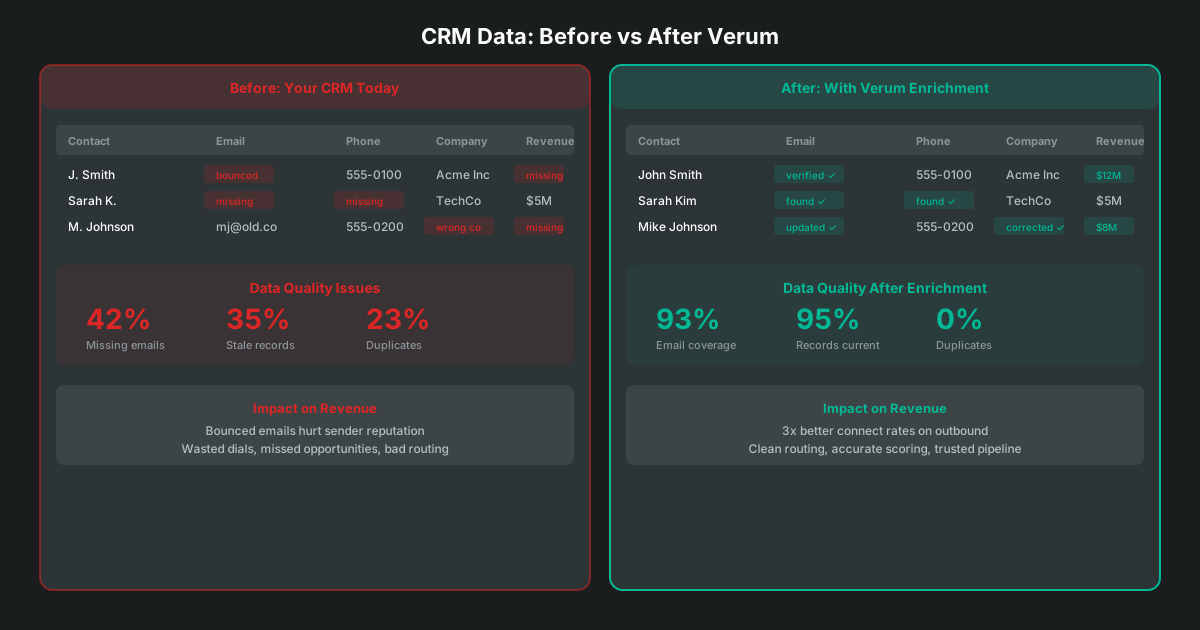
Building a targeted list of healthcare businesses sounds simple until you try it. Business directories are outdated. Purchased lists are stale. LinkedIn shows you names but not emails or direct phone numbers. Your team spends hours on manual research and still ends up with incomplete, unreliable data.
Purchased Lists Are Already Stale
List brokers sell the same healthcare businesses data to everyone. By the time you get it, 20-30% of the records have already decayed. Owners have changed, businesses have closed, phone numbers have been reassigned. You're paying for data your competitors already have, and it's already going bad.
Online Directories Miss the Details That Matter
Google, Yelp, and industry directories give you business names and addresses. They don't give you owner names, direct email addresses, or mobile numbers. The data that actually gets you a meeting, the owner's direct contact info, requires deeper sourcing.
Manual Research Doesn't Scale
Your reps can research 10-15 healthcare businesses per hour manually. At that rate, building a list of 500 takes a full work week. That's a week of selling time burned on data work that should've been handled in 24 hours.
Data Decays Before You Use It
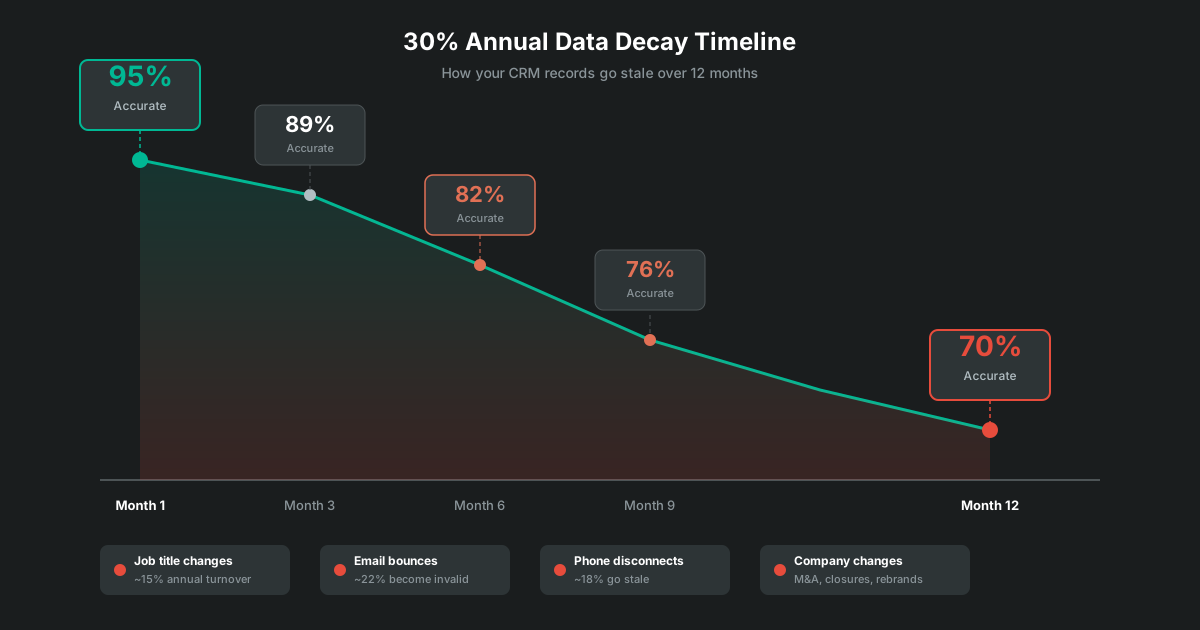
Healthcare companies have complex org structures with clinical and administrative decision-makers. Contact data for healthcare businesses decays at 30% per year. The list you built in January is already losing value by March. Without periodic refresh, your prospecting data gets worse every quarter.
How Verum Builds Healthcare Businesses Lists
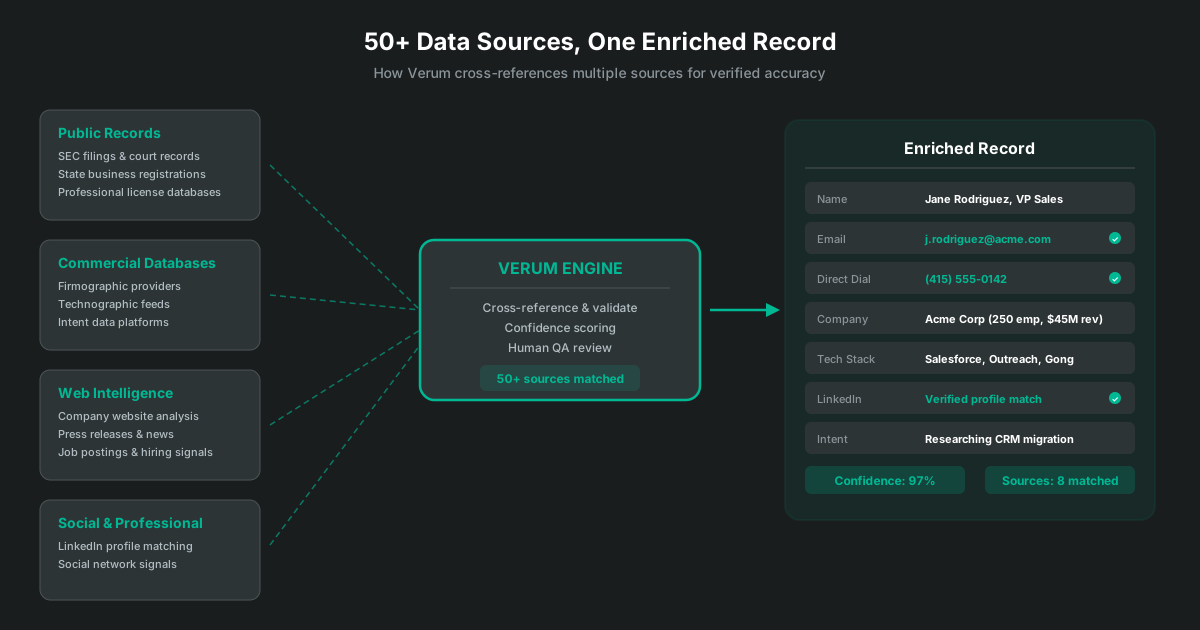
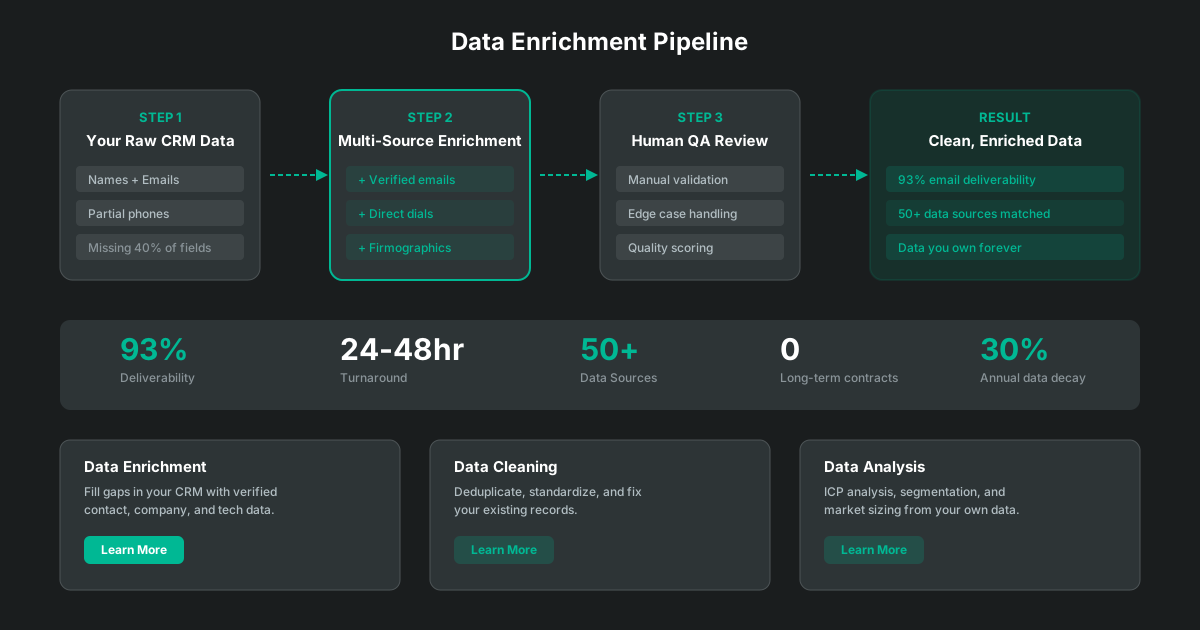
We build custom lists of healthcare businesses from 50+ verified sources. Every record includes the contact data your team needs: owner names, business emails, direct phone numbers, and company details. All verified before delivery.
Multi‑Source List Building
We don't scrape one directory and call it done. We cross-reference business registrations, professional licensing databases, verified directories, and public records to build the most complete and accurate list of healthcare businesses available.
For your team: You get a list built to your exact targeting criteria with data quality that exceeds any off-the-shelf purchased list.
Owner and Decision‑Maker Focus
We don't just find healthcare businesses. We find the people who make decisions at those businesses. Owner names, direct emails, and phone numbers that reach the actual decision-maker, not a receptionist.
Human QA on Everything
Every list goes through human review before delivery. We verify business operating status, validate contact data accuracy, and flag records that need attention.
What Teams Do With Healthcare Businesses Data
- Sales prospecting. Build targeted lists of healthcare businesses for outbound sales campaigns with verified contact data that reaches the right decision-makers.
- Direct mail campaigns. Reach healthcare businesses through direct mail with verified physical addresses. Clean address data means higher delivery rates.
- Local market expansion. Enter new markets with a complete list of healthcare businesses in your target geography. Know the landscape before you deploy resources.
- Partnership development. Identify potential partners among healthcare businesses with complete contact data for outreach to owners and operators.
- Market research. Understand the healthcare businesses landscape in any market with firmographic data on every business in the segment.
Getting Started Takes Less Time Than Your Average Meeting
Step 1: Free Assessment (5 minutes)
Upload a sample file or tell us what you need. We'll review your data and tell you exactly what we can do, with expected match rates and timelines for healthcare businesses.
Step 2: Discovery Call (30 minutes)
We'll walk through your current stack, data sources, and goals. No sales pitch. Just a technical conversation about your data.
Step 3: Data Analysis (on us)
We run a free analysis on a sample of your records so you can see results before committing to anything.
Step 4: Full Engagement
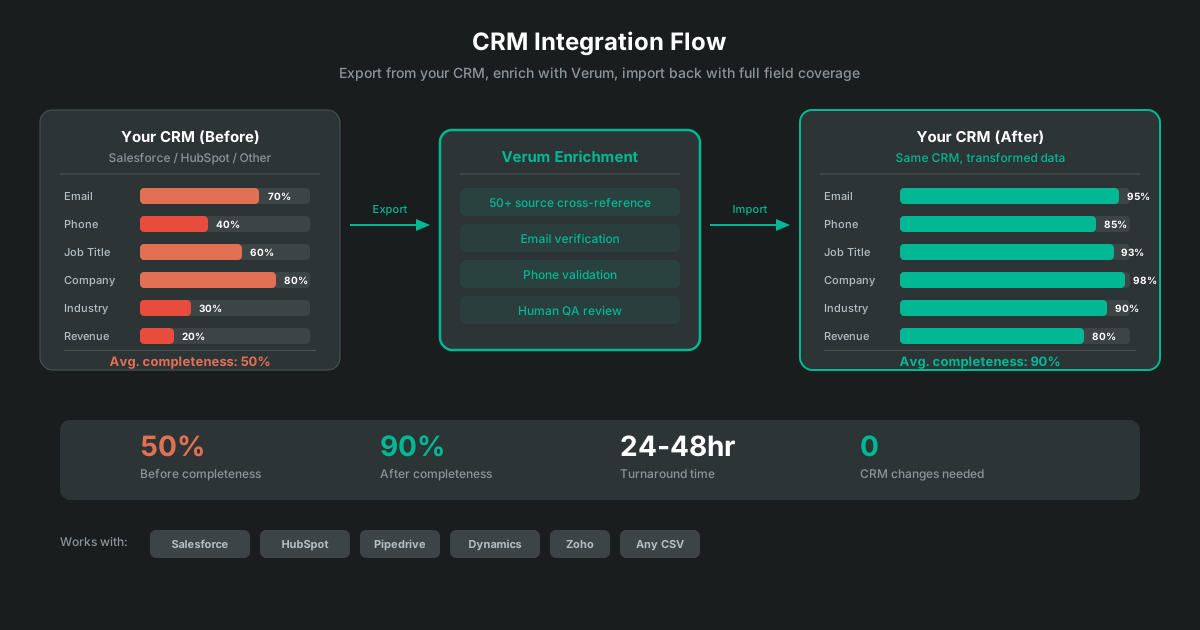
Once you approve the sample results, we process your full dataset. Most projects complete in 24‑48 hours.
Step 5: Ongoing (if you want it)
Data decays at 30% per year. We offer quarterly or monthly re‑enrichment to keep your records current. No long‑term contracts required.
Why Teams Choose Verum for Healthcare Businesses Lists
- We do the work. You don't log into a platform. Send us your data, we send back enriched records.
- Back to you in a day or two. We processed 50,000 records for a client last month in under 48 hours.
- Not just an API wrapper. We cross-reference 50+ sources and review the output. Automated tools miss things. We catch them.
- Month-to-month or one-off. We earn your business each time. No six-figure annual deal required.
- We know healthcare businesses. Healthcare companies have complex org structures with clinical and administrative decision-makers. Our team understands the data landscape and knows where to find accurate information.
The Old Way vs. With Verum
| The Old Way | With Verum |
|---|---|
| Buy a stale list from a list broker | Custom‑built list verified from 50+ current sources |
| 20‑30% of contacts are outdated | Every record validated before delivery |
| Generic business data, no owner contacts | Owner names, direct emails, and phone numbers |
| One‑time purchase, no updates | Re‑enrichment available as data decays |
| Same list your competitors already bought | Custom list built to your specific targeting criteria |
Common Questions About Finding Healthcare Businesses
How do you build healthcare businesses lists?
We compile data from business registrations, professional directories, verified databases, and public records. Every record is cross-referenced across 50+ sources and validated before delivery. You get accurate, current data, not a scraped list from 2023.
What data do I get for each healthcare businesse record?
Business name, address, phone, owner/operator name, owner email, owner phone, website, and available firmographic data (employee count, revenue range, years in business). Exact fields depend on data availability for each record.
Can you filter by geography, size, or specialty?
Yes. We can build lists filtered by state, city, metro area, employee count, revenue range, specialty, and other criteria. Tell us your targeting requirements during the discovery call.
How is this different from buying a ZoomInfo license?
ZoomInfo sells access to a contact database. We clean the data you already have. They charge $15K-$50K+/year per seat. We charge per project with no annual contract. And when you cancel ZoomInfo, you lose the data. With us, the enriched records are yours to keep.
What is CRM in healthcare?
A healthcare CRM is a software system that stores information about the people and organizations a healthcare business interacts with: patients, referring physicians, payers, vendors, and prospects. It tracks every interaction in one place. Common platforms include Salesforce Health Cloud, Microsoft Dynamics 365, HubSpot, and Veeva CRM (for pharma). A CRM is different from an EHR. The EHR holds clinical records; the CRM holds relationship and activity history.
What is CRM hygiene and what does it mean?
CRM hygiene is the ongoing practice of keeping your CRM data accurate, complete, and current. It includes deduplication, email validation, field standardization, and enrichment of missing data. In healthcare it also includes NPI verification, provider-status checks, and license-state validation. Unlike a one-time cleanup, hygiene is a recurring process (monthly or quarterly) that prevents data from degrading over time.
What is a CRM hygiene score?
A CRM hygiene score is a single number, usually on a 0-100 scale, that summarizes the cleanliness of a database. It rolls up duplicate rate, email bounce rate, field fill rate, and percent of records with activity in the last 90 days. There is no industry-standard formula; the value is in tracking the trend. A falling score is the early warning that something is contaminating the database.
What are some examples of CRM reports?
Common CRM reports include pipeline by stage, forecast by territory or owner, activity by rep (calls, meetings, emails), conversion rates between funnel stages, source attribution (which lead source produced the most closed-won), account health, and territory coverage. Healthcare-specific examples include referrals by referring physician, service-line acquisition cost, and rep coverage by hospital or IDN.
How is a healthcare CRM different from an EHR?
An EHR (electronic health record) holds clinical data: diagnoses, lab results, medications, treatment plans. It is governed by HIPAA and used by clinical staff. A CRM holds relationship and activity data: who knows whom, when they last spoke, what was promised. It is used by sales, marketing, business development, and patient outreach teams. Epic and Cerner are EHRs. Salesforce Health Cloud and HubSpot are CRMs.
Ready to Fix Your Data?
Not sure yet? Tell us your target market and we'll estimate list size and data coverage. Free, no commitment.
Ready to go? We'll have your verified list ready in 24-48 hours.
Related: All Find | Contact Enrichment | Sales Prospecting | Local Business Lists