The CRM Detection Advantage You're Missing
Knowing what software your prospects use changes how you sell to them. A company running Salesforce has different needs than one on HubSpot. A company using AWS is a different conversation than one on Azure. But most CRMs have zero technographic data.
Selling Blind Without Tech Stack Data
Your reps are pitching integration stories to companies using tools you don't integrate with. They're positioning against competitors that aren't in the deal. Without knowing what's already in the stack, every call starts from zero instead of building on what you know.
Competitive Displacement Requires Intelligence
If you're trying to replace a competitor's product, you need to know who's using it. Manually researching tech stacks through job postings, G2 reviews, and website source code is possible but takes 15-20 minutes per account. That doesn't scale to 5,000 target accounts.
Integration Compatibility Drives Adoption
Companies buy tools that work with what they already have. Knowing a prospect's tech stack lets you lead with relevant integration stories, which is the fastest path to a technical win. Without this data, your demo is generic and your value prop is abstract.
Technology Signals Buying Intent
When a company adopts a new CRM, they'll need data migration and enrichment. When they add a marketing automation platform, they need clean email lists. Technology changes create buying moments. Without technographic monitoring, you'll miss them.
How Verum Handles CRM Detection
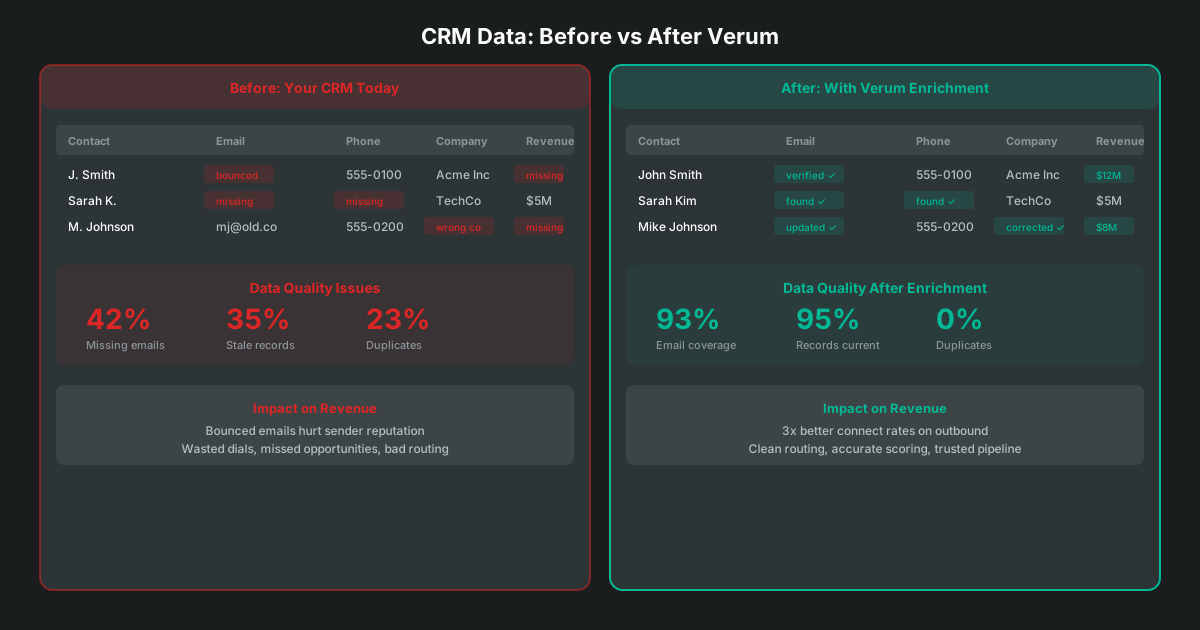
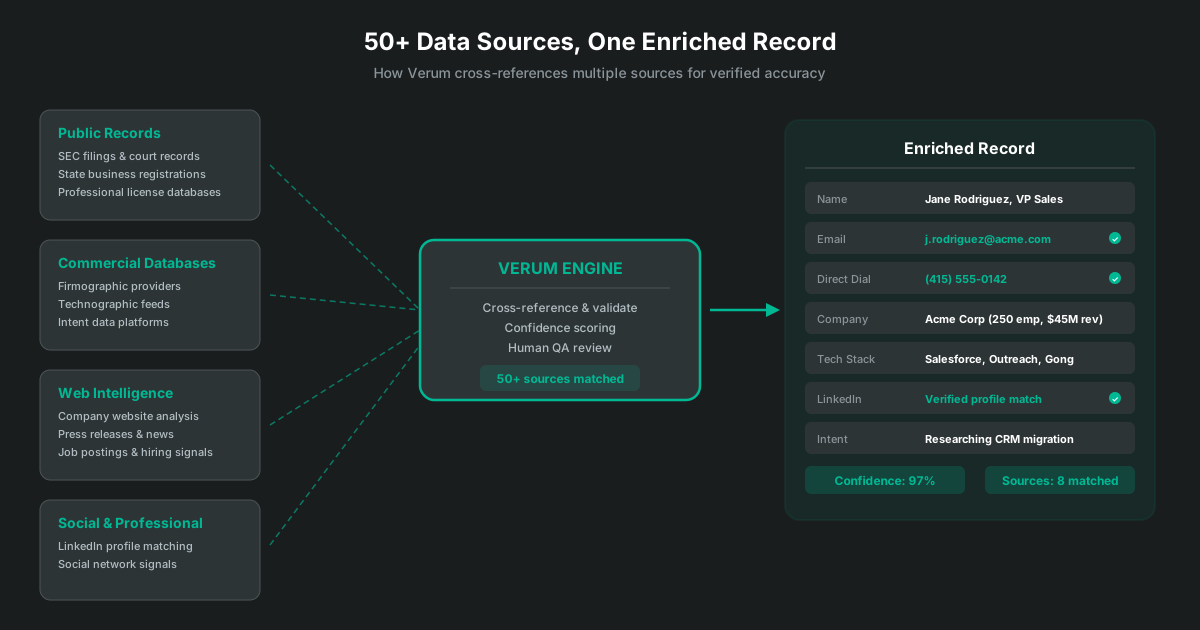
We identify and append technology stack data for your target accounts using website analysis, job posting signals, partnership directories, and verified technographic databases. You get structured fields showing exactly what tools each company uses.
Website Technology Detection
We analyze company websites to identify CRMs, marketing automation platforms, analytics tools, CDPs, and hundreds of other technologies. This gives you current, verified tech stack data without relying on self-reported surveys.
For your team: Know exactly which CRM, MAP, and key tools each prospect uses before the first call. Lead with relevant integration stories instead of generic feature pitches.
Job Posting Signal Analysis
When a company posts a job requiring Salesforce experience, they use Salesforce. When they list Snowflake as a requirement, they run Snowflake. We analyze job postings as a secondary technographic signal to validate and expand website-based detection.
Human QA on Everything
Technology detection from websites produces some false positives (a company may have legacy JavaScript on their site from a tool they no longer use). Our team validates detected technologies against multiple signals before appending.
What Teams Do With CRM Detection
- Competitive displacement. Identify accounts using competitor products for targeted displacement campaigns. CRM Detection shows you exactly who to go after.
- Integration-led selling. Lead with relevant integration stories by knowing what's already in the prospect's stack before the first call.
- Upsell and cross-sell. Identify customers who've adopted complementary tools, signaling readiness for additional products from your portfolio.
- Market analysis. Map technology adoption across your TAM to identify trends, whitespace, and emerging platforms.
- Product roadmap input. Use technology adoption data to prioritize integrations and features based on what your best customers and prospects actually use.
From First Contact to Clean Data
Step 1: Free Assessment (5 minutes)
Upload a sample file or tell us what you need. We'll review your data and tell you exactly what we can do, with expected match rates and timelines for crm detection.
Step 2: Discovery Call (30 minutes)
We'll walk through your current stack, data sources, and goals. No sales pitch. Just a technical conversation about your data.
Step 3: Data Analysis (on us)
We run a free analysis on a sample of your records so you can see results before committing to anything.
Step 4: Full Engagement
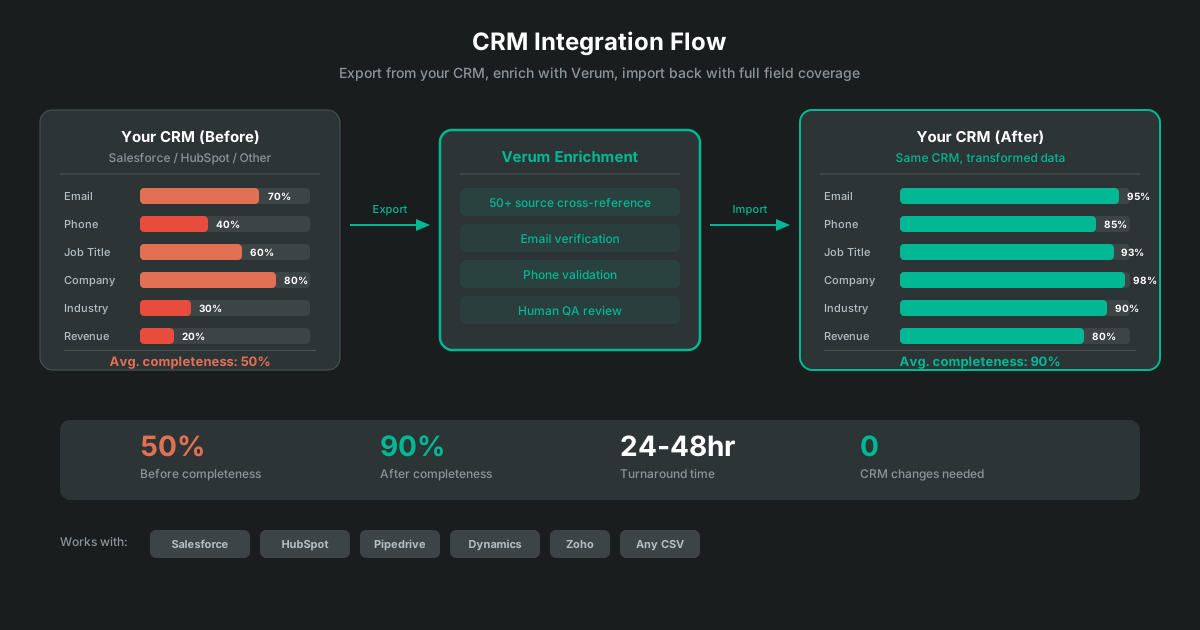
Once you approve the sample results, we process your full dataset. Most projects complete in 24‑48 hours.
Step 5: Ongoing (if you want it)
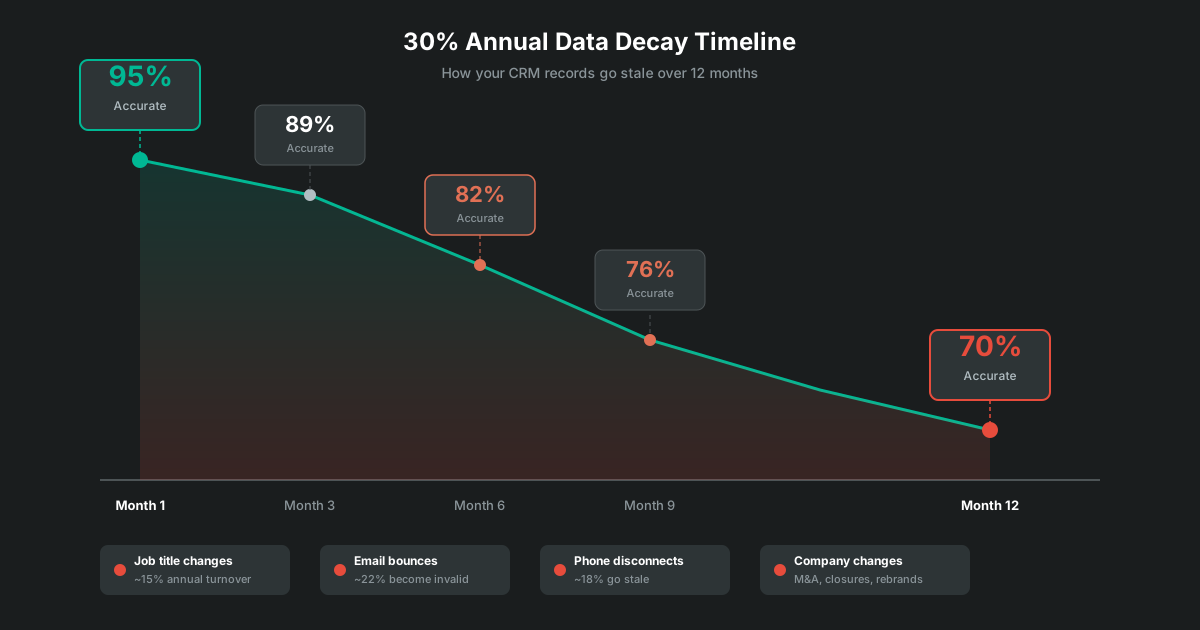
Data decays at 30% per year. We offer quarterly or monthly re‑enrichment to keep your records current. No long‑term contracts required.
Why Teams Choose Verum for CRM Detection
- Fully managed. Your team doesn't change their workflow. We plug in and handle the data side.
- Quick enough to be useful. Most teams get results before their next pipeline review meeting.
- Human verification. Every project gets human QA. We don't just run your data through an API and hand it back.
- Pay as you go. One project, one invoice. Come back when you need us again. No lock-in.
- We understand crm detection. We've enriched millions of records across every data type. Our team knows the edge cases and pitfalls specific to crm detection.
The Old Way vs. With Verum
| The Old Way | With Verum |
|---|---|
| Reps ask 'what CRM do you use?' on cold calls | Tech stack data pre‑loaded before first contact |
| Generic demos with no integration context | Tailored demos that show relevant integrations |
| No competitive intelligence on install base | Clear picture of which prospects use competitors |
| Manual website research for tech clues | Automated detection across 10K+ technologies |
| Point‑in‑time snapshots | Quarterly refresh catches technology changes |
Common Questions About CRM Detection
How long does crm detection take?
Most projects complete in 24-48 hours. For databases over 100,000 records, turnaround may extend to 3-5 business days. We'll give you an exact timeline during the free assessment.
How often does technographic data change?
Tech stacks change frequently. Companies adopt new tools, sunset old ones, and switch vendors regularly. We recommend quarterly re-enrichment for technographic data to keep your records current.
What's the typical match rate for crm detection?
Match rates depend on the completeness of your input data and the specific enrichment type. For well-structured B2B records with company names and domains, expect 60-80% match rates. We run a free sample analysis to show you expected rates before you commit.
How is this different from buying a ZoomInfo license?
ZoomInfo sells access to a contact database. We clean the data you already have. They charge $15K-$50K+/year per seat. We charge per project with no annual contract. And when you cancel ZoomInfo, you lose the data. With us, the enriched records are yours to keep.
Ready to Get Started?
Not sure yet? Send us a sample file. We'll run a free analysis showing match rates, data gaps, and what enrichment can add. No commitment required.
Ready to go? Tell us what you need and we'll have enriched data back to you in 24-48 hours.
Related: All Enrichment | Enrichment Services | Company Enrichment | Intent Data